For years, the British public has been told there is a national “climate emergency” so severe that vast areas of countryside must now be covered in solar panels, battery compounds, substations, pylons and industrial infrastructure.
Communities have been told there is no alternative.
Farmers have been lectured about “national necessity.”
Villages have been informed that productive agricultural land must be sacrificed for the greater good.
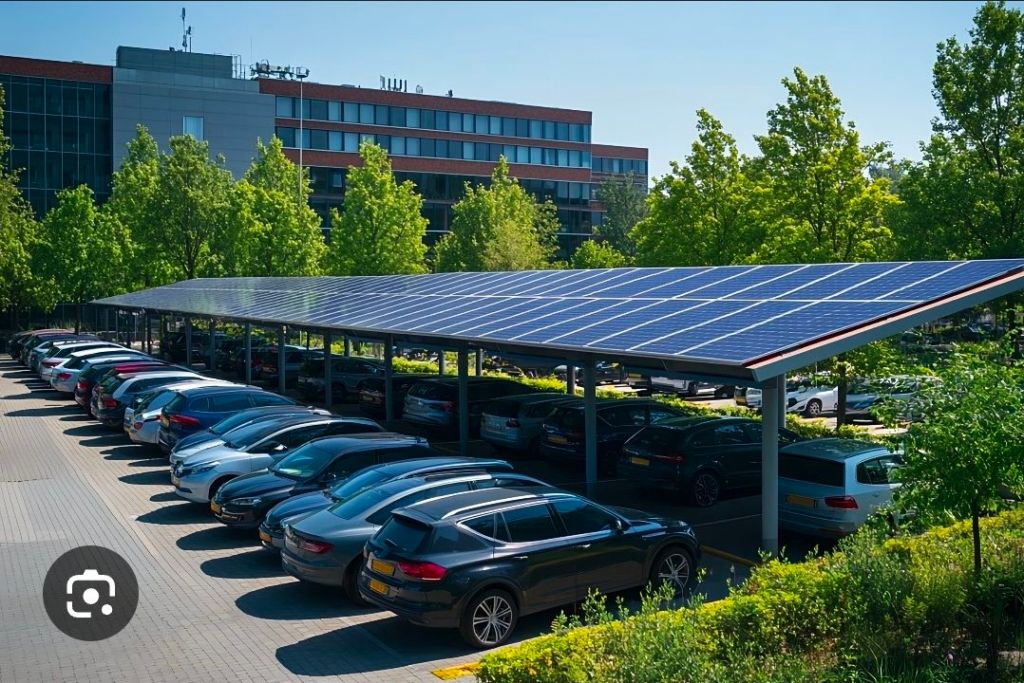
And yet, in one extraordinary decision, Department for Energy Security and Net Zero has now quietly abandoned plans to require solar canopies over new car parks because the economics no longer stack up.
That single decision exposes one of the greatest contradictions at the heart of Ed Miliband’s entire energy strategy.
The public immediately understood the contradiction.
If solar over existing developed land is suddenly considered:
too expensive,
too difficult,
too structurally complex, or
insufficiently profitable,
then why is the government still aggressively supporting the industrialisation of Britain’s countryside?
Why are thousands of acres of farmland still being targeted?
Why are rural communities being expected to absorb developments that urban Britain is unwilling to host?
And why does “cost-effectiveness” suddenly matter only when the proposal involves brownfield land instead of green fields?
That is the question now being asked across the country.
The Real Message the Public Heard
The official explanation from DESNZ was that mandatory solar car ports may not deliver the savings originally promised once installation costs were fully considered.
But many people interpreted the decision very differently.
To critics, the message sounded like this:
“Solar is too expensive on land we have already built on — so we will continue covering agricultural land instead.”
That is politically devastating because it reinforces what many communities already suspect: that the current solar strategy is not being driven by intelligent land use, public consent or balanced planning.
It is being driven by deployment targets.
The easiest land to build on is open countryside.
The cheapest land to lease is often farmland.
The fastest way to hit gigawatt targets is to industrialise rural Britain.
So that is exactly what developers pursue.
And DESNZ continues to encourage it.
Consultation in Name Only
Across England, local residents increasingly feel they are not participating in genuine consultation exercises at all.
Instead, they feel they are being processed through a centrally managed system where the strategic decision has already been made before a single public exhibition begins.
Communities are handed thousands of pages of technical documents, grid reports, environmental statements and planning jargon, while the underlying policy direction is treated as untouchable.
The public is allowed to comment on:
hedgerow buffers,
fence colours,
traffic routing,
or landscaping.
But they are rarely allowed to challenge the central premise itself: whether productive countryside should be industrialised in the first place.
That is why anger is growing.
People no longer believe they are being consulted meaningfully.
They believe they are being managed.
Miliband’s Political Miscalculation
Ed Miliband appears to fundamentally misunderstand the nature of public consent.
Most people are not automatically opposed to solar energy.
What they oppose is perceived unfairness and hypocrisy.
The British public would overwhelmingly prefer to see:
warehouse roofs used first,
retail parks utilised,
brownfield sites prioritised,
transport corridors developed,
and car parks covered,
before vast stretches of countryside are transformed into industrial energy estates.
That is simply common sense to most voters.
But instead of prioritising those visibly logical solutions, DESNZ has effectively admitted they are economically harder to deliver.
So rather than solving that problem, the government appears to have chosen the easier political route: push development into weaker rural planning areas instead.
That is why opposition is intensifying.
The Dangerous Collapse of Trust
The car park reversal matters because it shattered the government’s central moral argument.
For years the public was told:
every available surface must be used,
every option must be explored,
and extraordinary measures were justified.
But when one of the most publicly acceptable forms of solar deployment became financially inconvenient, it was abandoned.
Meanwhile, agricultural land remains under relentless pressure.
That creates a perception of selective logic:
urban inconvenience is negotiable,
rural sacrifice is mandatory.
And once people begin believing policy is being applied unfairly, trust collapses rapidly.
Britain Needs an Energy Strategy — Not a Land Grab
Britain does need energy security.
It does need grid investment.
It does need long-term infrastructure planning.
But increasingly, the public sees the current approach not as a balanced national strategy, but as a politically protected land transformation programme driven by ideological targets and enforced from the centre outward.
The result is growing resentment, collapsing trust, and a widening divide between policymakers in Westminster and the communities expected to live with the consequences.
If DESNZ and Ed Miliband genuinely wanted public support for solar expansion, they would have prioritised the places the public already supports:
rooftops,
warehouses,
industrial estates,
brownfield land,
and car parks.
Instead, they abandoned the car parks and accelerated the pressure on the countryside.
And the public noticed.
Shane Oxer. Campaigner for fairer and affordable energy
 SAY NO TO THE DESTRUCTION OF OUR LAND
Leave a comment