DESNZ Admits Solar on Car Parks Is Too Expensive — So Why Are They Still Covering Farmland Instead?
By Shane Oxer — Campaigner for fairer and affordable energy
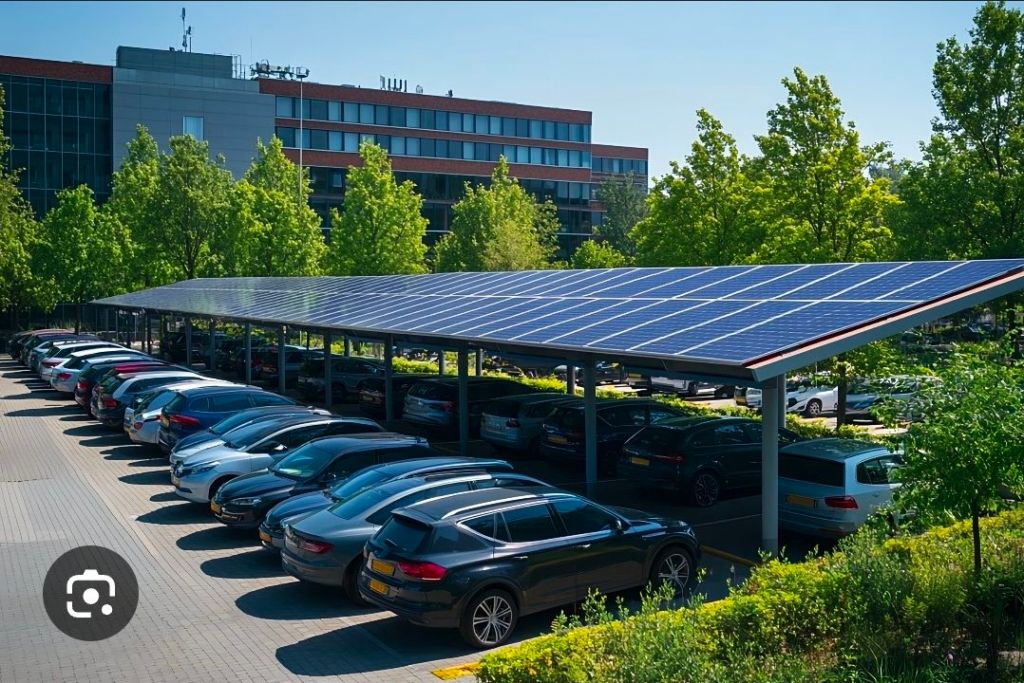
When the Department for Energy Security and Net Zero (DESNZ) launched its consultation on solar canopies for car parks in May 2025, it was presented as a major step toward “smart” solar deployment. The proposal explored mandating solar canopies above new outdoor car parks and expanding EV charging infrastructure alongside them. �
GOV.UK +1
The logic sounded obvious:
use already developed land,
generate electricity where demand already exists,
protect countryside and farmland,
and integrate solar directly with EV charging.
Yet on 21 May 2026, DESNZ quietly abandoned the proposal.
Its conclusion was brief and revealing:
“This policy will not be taken any further at this point.” �
GOV.UK
That single sentence exposes one of the biggest contradictions at the heart of UK solar policy.
Because if solar on:
car parks,
warehouses,
industrial estates,
and brownfield sites
is considered too expensive or difficult…
why is the government still pursuing vast solar developments across productive farmland and greenbelt landscapes?
The answer is uncomfortable.
DESNZ Has Accidentally Exposed the Real Economics of Solar
The government never explicitly stated:
“Solar car parks are too expensive.”
But the evidence from consultation responses makes the reality unmistakable.
Industry groups repeatedly warned about:
higher installation costs,
structural engineering requirements,
grid connection problems,
insurance liabilities,
and longer payback periods. �
Energy UK +1
Energy UK’s formal response admitted:
“Costs for canopies are higher than rooftop or ground-mounted solar.” �
Energy UK
It also acknowledged:
extra steel structures,
battery storage costs,
and insurance complications. �
Energy UK
Even supporters of the policy conceded that solar car parks become economically difficult once real engineering requirements are considered.
This matters enormously.
Because it demonstrates something campaigners have argued for years:
Large-scale solar deployment in Britain only appears “cheap” when developers are allowed to use enormous areas of open countryside.
Why Farmland Solar Is Preferred
Ground-mounted solar farms are vastly cheaper because they avoid the complexities of urban infrastructure.
Developers can:
drive piles directly into soil,
install lightweight frames,
avoid reinforced foundations,
avoid complex drainage redesign,
avoid elevated steel canopy systems,
and use cheap agricultural land leases.
In other words: the countryside subsidises the economics of solar deployment.
The environmental costs are externalised onto:
rural communities,
food production,
biodiversity,
landscapes,
and local infrastructure.
That is why DESNZ backed away from car park mandates.
Once solar has to compete in the real built environment , with actual engineering, structural and planning costs , the economics become far less attractive.
Miliband’s “Untapped Potential” Narrative
Ed Miliband repeatedly promoted the idea that Britain’s car parks represented “untapped potential” for solar deployment. �
LinkedIn +1
At first glance, he was right.
Using:
rooftops,
warehouses,
transport hubs,
commercial estates,
and car parks
is clearly more rational than industrialising farmland.
Even many opponents of large solar farms support:
rooftop solar,
microgeneration,
brownfield deployment,
and integrated urban solar.
But DESNZ’s retreat reveals the deeper problem: urban-integrated solar is expensive.
And because it is expensive, government policy increasingly defaults to the cheapest possible route: industrial-scale countryside deployment.
The Grid Problem DESNZ Cannot Escape
The consultation also exposed another reality the government rarely discusses openly: grid constraints.
Large EV charging hubs combined with solar canopies create complicated local electricity flows:
daytime export spikes,
sudden charging demand,
and local network instability.
Many distribution networks are already struggling.
The irony is extraordinary.
The same government demanding:
rapid EV adoption,
mass heat pump deployment,
and huge renewable expansion
is simultaneously operating within a grid system that lacks the infrastructure to support it efficiently.
This mirrors problems already emerging across Britain:
overloaded substations,
delayed transformer upgrades,
“zombie” generation projects waiting years for connections,
and escalating reinforcement costs.
The further Britain electrifies transport while depending on intermittent generation, the more severe these contradictions become.
Why Farmland and Greenbelt Will Still Be Targeted
Despite abandoning solar car park mandates, DESNZ and Miliband are unlikely to slow countryside solar expansion.
In fact, the opposite is more likely.
Why?
Because the government still faces enormous deployment targets.
The Clean Power 2030 plan aims to expand UK solar capacity dramatically by the end of the decade. �
Solar Power Portal +1
Yet once:
rooftops become expensive,
car parks become complicated,
and urban infrastructure becomes constrained,
the easiest remaining option is agricultural land.
That is why communities across:
Yorkshire,
Lincolnshire,
Nottinghamshire,
Cambridgeshire,
and the Midlands
continue seeing wave after wave of solar applications.
It is not because farmland is the most environmentally responsible solution.
It is because farmland is the cheapest and simplest route for developers.
“Don’t Cover Our Fields — Cover Car Parks”
Public frustration with this contradiction is already growing.
Across social media and consultation responses, a common message emerged:
“Don’t cover our fields. Cover car parks.”
But DESNZ’s own conclusions now show why government policy avoids that route.
Because once solar deployment leaves cheap rural land and enters the real world of:
structural engineering,
urban planning,
commercial retrofitting,
and constrained electrical networks,
the true costs become visible.
The Contradiction at the Heart of Net Zero
This episode exposes a deeper contradiction in Britain’s Net Zero strategy.
The government promotes solar as:
cheap,
simple,
scalable,
and universally deployable.
Yet the moment policymakers explored one of the most sensible alternatives to farmland solar , car park canopies , the proposal quietly collapsed.
Why?
Because integrated solar infrastructure is difficult, expensive and grid-constrained.
That leaves Britain trapped in an increasingly destructive cycle:
more farmland loss,
more greenbelt pressure,
more transmission infrastructure,
more substations,
more battery storage,
and more public opposition.
Meanwhile, the truly strategic questions remain unanswered:
where will winter power come from?
how will Britain handle prolonged low-renewable periods?
and how much will the full infrastructure transformation actually cost?
DESNZ may have abandoned solar car parks.
But in doing so, it accidentally revealed the uncomfortable truth behind Britain’s solar expansion strategy: the countryside is being targeted because it is the cheapest remaining option.
Not because it is the best one.
References
https://www.gov.uk/government/calls-for-evidence/solar-on-car-parks-and-electric-vehicle-charging?utm_source=chatgpt.com
https://www.solarpowerportal.co.uk/solar-technology/uk-government-leaves-solar-carport-mandate-hanging-as-ev-charging-takes-policy-priority?utm_source=chatgpt.com
https://energyadvicehub.org/government-considers-mandating-solar-pv-in-car-parks/?utm_source=chatgpt.com
solarpowerportal.co.uk� �
Solar Power Portal
energyadvicehub.org� �
Energy Advice Hub
 SAY NO TO THE DESTRUCTION OF OUR LAND
Leave a comment