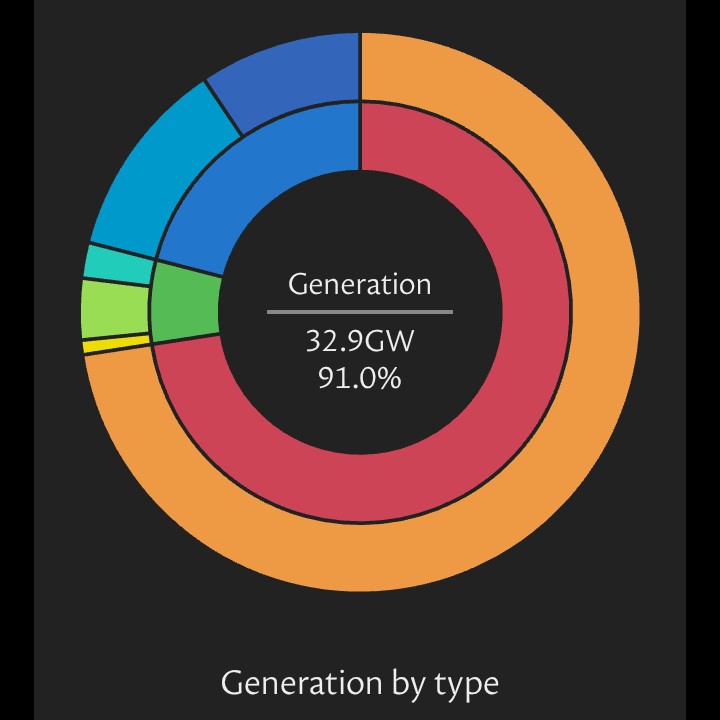
The UK’s renewable ambitions are accelerating rapidly , but the infrastructure required to support them may not arrive until well into the 2030s
Britain is pursuing one of the most ambitious electricity transitions in Europe. Vast offshore wind arrays are expanding across the North Sea. Solar developments increasingly cover large areas of agricultural land. Battery storage projects are multiplying across the country. Ministers continue to promise “clean power by 2030”, while the Climate Change Committee and National Energy System Operator (NESO) outline an energy future dominated by electrification and renewable generation.
Yet beneath the political rhetoric lies a growing engineering problem.
The viability of Britain’s Net Zero strategy does not depend solely upon how many wind turbines or solar farms receive planning consent. It depends upon whether the electricity grid itself can physically transport, stabilise, and integrate the enormous quantities of power now being proposed.
Current evidence increasingly suggests it cannot , at least not within the timescales now being promised.
The uncomfortable reality emerging from Britain’s own Transmission Entry Capacity (TEC) Register and electricity infrastructure timelines is that large parts of the grid reinforcement required to support this transition may not be operational until well into the mid-to-late 2030s. Meanwhile, generation projects continue advancing ahead of the physical network necessary to support them.
In effect, Britain is attempting to build generation capacity faster than the electricity system required to carry it.
The Grid That Does Not Yet Exist
The British electricity grid was designed around large synchronous generators , coal, gas, and nuclear stations whose heavy rotating turbines inherently stabilised system frequency and voltage.
Modern renewable systems operate differently. Wind and solar are intermittent and largely inverter-based. While technologically valuable, they do not naturally provide the same inertia or stability characteristics as conventional synchronous generation. As renewable penetration rises, the grid requires increasing quantities of supporting infrastructure:
synchronous compensators,
reactive power systems,
large-scale battery balancing,
grid-forming inverters,
reserve capacity,
and extensive transmission reinforcement.
NESO’s Beyond 2030 plans therefore amount to one of the largest infrastructure programmes in modern British history:
thousands of kilometres of transmission reinforcement,
new HVDC corridors,
major substation expansions,
and super grid transformer installations across England and Scotland.
Yet much of this infrastructure remains years from completion.
At the same time, the TEC Register reveals enormous quantities of queued generation already seeking connection to constrained parts of the network.
Norfolk: Britain’s Offshore Energy Bottleneck
Nowhere illustrates the contradiction more clearly than Norfolk and the wider East Anglia corridor.
These regions sit at the centre of Britain’s offshore wind strategy. Yet they also reveal the scale of the reinforcement challenge facing the transmission system.
Norwich Main 400kV Substation alone shows approximately 5.3 GW of queued generation capacity associated with offshore wind, solar, and battery systems, with effective dates extending as far as 2033.[1]
North Anglia Connection Nodes A, B, C, and E collectively reveal several additional gigawatts of solar and battery capacity dependent upon reinforcements extending between 2032 and 2037.[2]
Walpole, Necton, Bramford, and South Anglia nodes further demonstrate how concentrated generation growth is becoming across East Anglia.[3]
The issue is not merely the volume of generation itself. It is the sequencing.
Large quantities of offshore and onshore generation are being approved before the supporting transmission system is fully operational. NESO’s own reinforcement schedules show that much of the East Coast transmission architecture required to support these flows remains incomplete.
This creates a growing risk of long-term structural constraint: generation capacity exists on paper, but the physical network required to export and distribute the electricity does not yet fully exist.
Lincolnshire: Solar Expansion Ahead of Grid Reality
Lincolnshire presents an equally striking example.
Navenby 400kV Substation alone carries nearly 5.7 GW of associated solar and battery capacity, with reinforcement-linked dates extending to 2034.[4]
Bicker Fen, Mablethorpe, Grimsby West, South Humber, and Spalding nodes collectively reveal thousands more megawatts of queued generation tied to future reinforcement schedules extending through the 2030s.[5]
At the same time, Lincolnshire is becoming one of Britain’s most heavily targeted regions for large-scale solar deployment.
This matters because energy density matters.
Modern nuclear generation can produce enormous quantities of reliable electricity from comparatively small land footprints. Solar generation, by contrast, is lower-density and intermittent, requiring substantially larger land areas, backup systems, storage capacity, and network reinforcement to provide equivalent system reliability.
The result is a profound transformation of rural landscapes:
productive farmland converted to energy infrastructure,
battery complexes expanding across agricultural regions,
substations and transmission corridors proliferating,
and increasing dependence upon grid infrastructure still years from completion.
This is often presented politically as environmental progress.
Yet many communities increasingly view it as industrialisation of the countryside in pursuit of targets the infrastructure cannot yet support.
The Hidden Cost of Constraint
The consequences are already visible within the electricity market.
When renewable generation exceeds transmission capability, grid operators are forced to curtail output. Wind farms are compensated for reducing generation, while gas plants elsewhere may simultaneously be paid to remain operational to preserve system stability and regional supply security.
Consumers ultimately pay for both.
Constraint and balancing costs have risen sharply in recent years and are passed directly onto households and businesses through electricity bills.
The visible wind turbine or solar array therefore represents only part of the true system cost. The larger , and often politically obscured , expense lies within the enormous infrastructure required to integrate intermittent generation reliably into the national grid.
This includes:
transformer procurement,
HVDC systems,
synchronous compensation,
balancing services,
storage,
reserve generation,
and network reinforcement.
The International Energy Agency has repeatedly warned that global grid investment is failing to keep pace with renewable deployment. Transformer shortages and HVDC supply chain bottlenecks are now affecting multiple advanced economies.
Britain is attempting one of Europe’s fastest electricity transitions precisely as global competition for these components intensifies.
Foreign Ownership and Consumer Exposure
The political rhetoric surrounding “home-grown energy” also deserves greater scrutiny.
Large portions of Britain’s renewable infrastructure are financed and operated by overseas entities. Offshore wind ownership includes major foreign state-backed or multinational companies such as Ørsted, Equinor, and RWE. Solar and battery developments similarly attract international investment capital supported by Britain’s subsidy and Contracts for Difference framework.
British consumers therefore increasingly function as the stable financial base underwriting infrastructure that is frequently foreign-owned while remaining dependent upon globalised supply chains heavily concentrated in Asia.
This arrangement might remain politically sustainable if the system delivered rapidly falling costs and stable infrastructure.
Instead, Britain risks constructing an electricity model that remains structurally expensive for decades:
high balancing costs,
high network charges,
rising standing charges,
industrial electricity prices among the highest in the developed world,
and continuing dependence upon large-scale grid reconstruction.
Engineering Reality Versus Political Timelines
None of this means renewable energy has no role in Britain’s future electricity system.
Nor does it imply that decarbonisation should be abandoned.
The issue is sequencing, engineering realism, and infrastructure readiness.
Britain is currently attempting to compress into a single decade:
massive generation expansion,
nationwide transmission reconstruction,
electrification of transport and heating,
industrial decarbonisation,
and system balancing transformation.
The TEC Register increasingly suggests these timelines may not align with engineering reality.
Many strategically important nodes now show reinforcement dependencies extending well beyond 2030. Significant quantities of generation capacity appear likely to remain constrained into the mid-2030s and potentially beyond.[6]
The central risk is therefore becoming difficult to ignore:
Britain may succeed in building large quantities of renewable generation while failing to complete the physical electricity system required to use it efficiently.
The result would not simply be delayed climate targets.
It would be an electricity system characterised by:
rising consumer costs,
persistent curtailment,
infrastructure congestion,
and growing public resistance to landscape industrialisation.
In the end, the greatest danger to Britain’s energy transition may not be insufficient ambition.
It may be attempting to build the generation before building the grid.
References
[1] TEC Register — Norwich Main 400kV Substation, queued capacity and effective dates.
[2] TEC Register — North Anglia Connection Nodes A–E reinforcement timelines and queued MW.
[3] TEC Register — Walpole, Necton, Bramford and South Anglia connection node schedules.
[4] TEC Register — Navenby 400kV Substation queued solar and BESS capacity.
[5] TEC Register — Bicker Fen, Grimsby West, South Humber, Mablethorpe and Spalding node timelines.
[6] UK TEC Substation Node List — multiple reinforcement dates extending between 2033–2039 across strategic transmission nodes.
Shane Oxer. Campaigner for fairer and affordable energy
 SAY NO TO THE DESTRUCTION OF OUR LAND
Leave a comment