The Coming Energy Price Shock Facing British Households
My electricity tariff alone is rising by around 25% per kilowatt hour.
Every appliance in my home now costs roughly a quarter more to run , despite years of promises that the UK’s energy transition would eventually make electricity cheaper.
That single fact should alarm every household in Britain.
Because this is not happening in the middle of a global energy emergency.
Wholesale gas prices have fallen significantly from the peaks seen during the 2022 crisis. Politicians continue claiming the market is stabilising. Yet millions of customers coming off older fixed tariffs are discovering a harsh reality:
Their bills are still rising dramatically.
I recently compared my old energy tariff with the new “best offers” now available from my supplier.
The results were staggering.
My Old Tariff vs Today’s Prices
Old Fixed Tariff
Electricity: 20.36p/kWh
Gas: 5.99p/kWh
New Flexible Tariff
Electricity: 25.30p/kWh
Gas: 7.27p/kWh
Increase
Electricity: approximately 25% higher
Gas: approximately 21% higher
That means every:
kettle,
cooker,
microwave,
electric heater,
tumble dryer,
immersion heater,
washing machine,
and appliance in the house
now costs significantly more to operate.
For an average household using 4,000 kWh of electricity annually, this increase alone can add hundreds of pounds per year before standing charges are even included.
And that is where the real scandal begins.
The Standing Charge Trap
While unit prices receive most attention, standing charges have quietly become one of the most punishing aspects of the UK energy system.
My electricity standing charge is now over 66p per day.
That means households are paying around:
£240 per year simply for being connected to the electricity network , before using a single unit of power.
Families are effectively being taxed for having access to energy.
This particularly punishes:
pensioners,
low-income households,
people trying to conserve energy,
and those living in rural areas.
The less energy you use, the more unfair the system becomes.
The Great Contradiction at the Heart of UK Energy Policy
At the exact moment electricity is becoming dramatically more expensive, the public are being told to electrify everything.
The government wants households to:
switch to electric vehicles,
replace gas boilers with heat pumps,
install electric heating systems,
and increase dependence on the electricity grid.
But how can this possibly work when electricity itself is becoming increasingly unaffordable?
The public were promised cheaper electricity through renewable energy and Net Zero policies.
Instead, many households are now seeing:
electricity prices up by 20–25%,
standing charges at record highs,
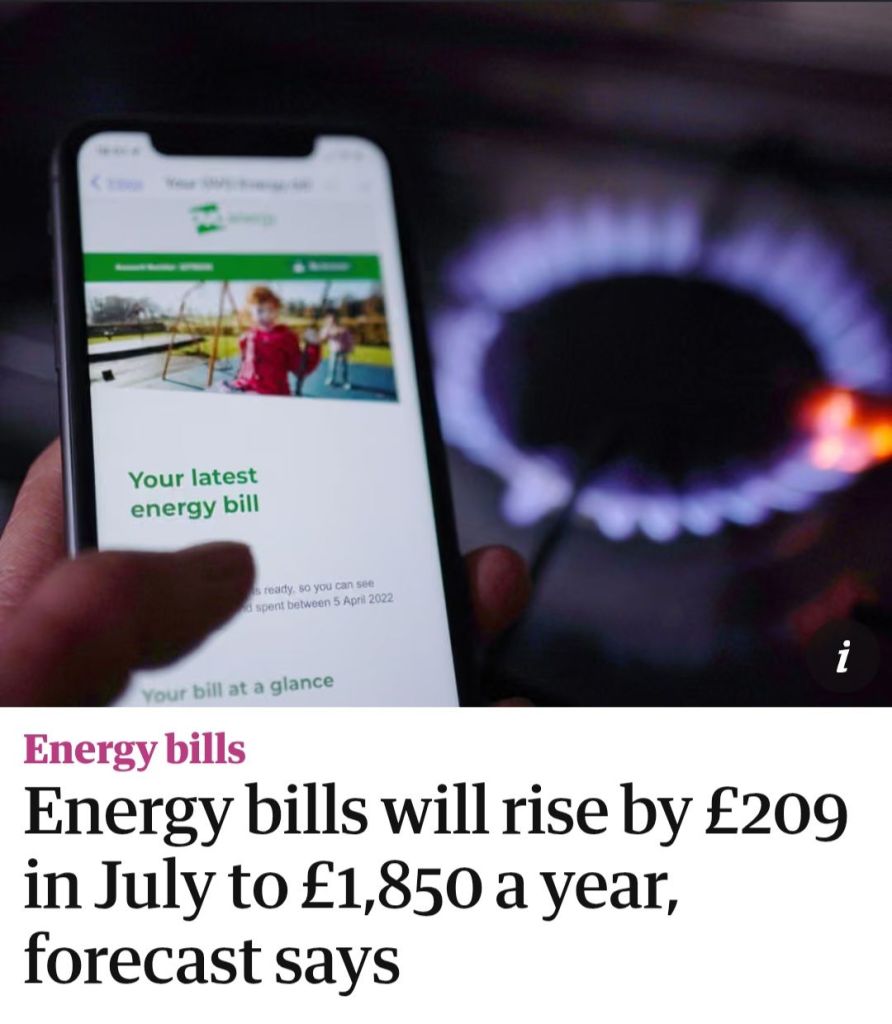
and annual bills remaining above £2,000.
This is not the affordable energy future people were promised.
Why Bills Keep Rising Even When Gas Prices Fall
Most people assume energy bills rise and fall mainly because of wholesale gas prices.
That is no longer the full story.
A growing proportion of household energy bills now comes from the enormous cost of rebuilding and restructuring Britain’s electricity system.
Consumers are increasingly paying for:
grid reinforcement,
renewable subsidies,
balancing costs,
battery storage integration,
pylons and substations,
offshore transmission,
AC/DC converter stations,
and curtailment payments.
These costs are quietly embedded into:
standing charges,
network fees,
policy levies,
and supplier costs.
In simple terms, households are helping fund one of the largest infrastructure transformations in modern British history.
And the bill is only just beginning.
The Grid Is Becoming More Expensive to Operate
Britain’s energy system is increasingly dependent on intermittent generation such as wind and solar.
That creates serious balancing problems.
When wind output suddenly falls, backup generation must rapidly compensate.
When wind farms generate too much electricity in the wrong location, operators are often paid to switch them off.
At the same time, gas stations elsewhere are paid to generate electricity to stabilise the grid.
Consumers ultimately pay for both sides of this inefficiency.
The result is a system becoming structurally more expensive year after year.
The Coming Household Squeeze
The danger now is that Britain is entering an era of permanent energy inflation.
Not temporary spikes.
Not short-term crises.
Permanent high costs.
Millions of households coming off older fixed tariffs over the next 12–24 months may face the same shock I have just seen:
20–25% increases in electricity costs,
high standing charges,
and annual bills remaining painfully elevated.
Meanwhile wages are not keeping pace.
The result will be:
increased fuel poverty,
reduced disposable income,
pressure on pensioners,
and growing public anger over energy policy.
The Public Deserve the Truth
The British public deserve honesty.
If the transition to a new energy system requires decades of expensive infrastructure investment, politicians should admit it.
If standing charges are rising because consumers are funding grid expansion, they should say so openly.
If electrification will increase dependence on an already overstretched grid, the country deserves a serious debate before irreversible decisions are made.
Instead, the public continues to hear promises of lower bills “in the future” while their direct debits keep rising in the present.
For millions of households, the reality is now impossible to ignore.
Electricity is becoming more expensive at the precise moment Britain is being told to depend on it for everything.
And households are paying the price.
Shane Oxer. Campaigner for fairer and affordable energy
 SAY NO TO THE DESTRUCTION OF OUR LAND
Leave a comment