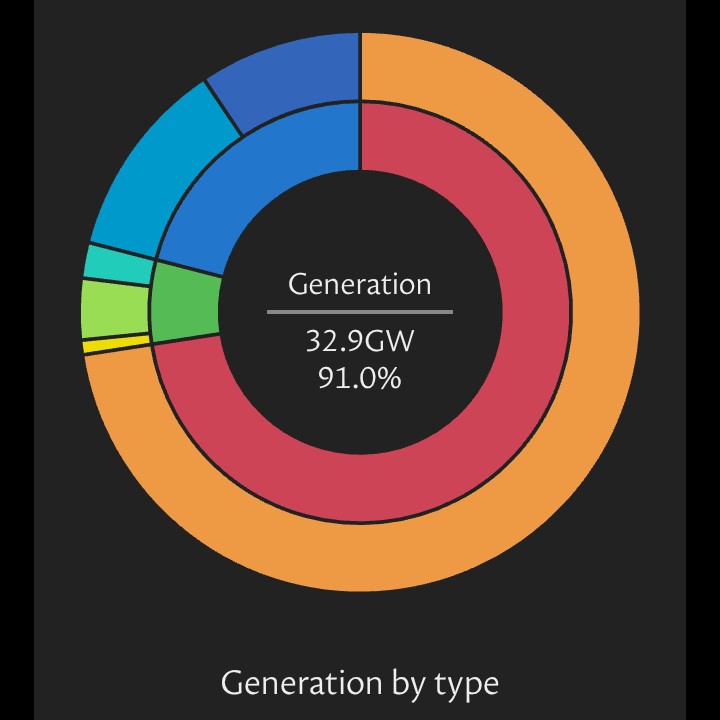
For years, the British public was told that Net Zero was about cleaner energy, technological progress, and protecting the environment. Most people assumed it meant innovation , better power stations, cleaner industry, improved efficiency, and investment in the future.
But that is not the direction things are taking.
Instead, Net Zero is increasingly becoming about control.
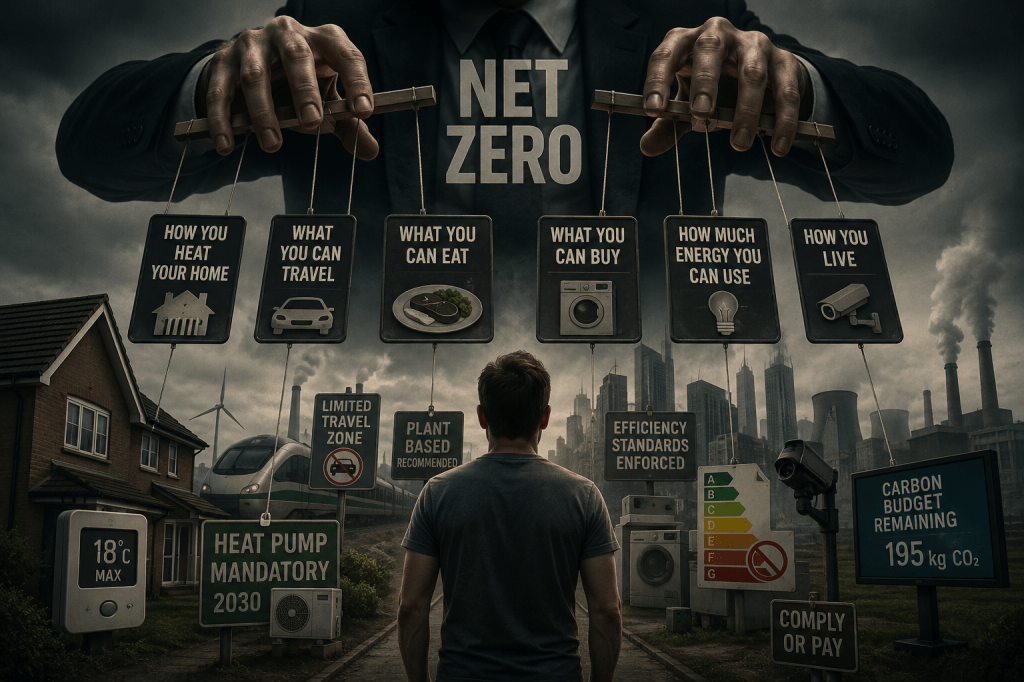
Control over how you heat your home. Control over how you travel. Control over what appliances you can buy. Control over what you are encouraged to eat. Ultimately, control over how you live your daily life.
The latest proposals from the Department for Energy Security and Net Zero perfectly demonstrate this growing shift. Heated towel rails deemed “inefficient” could disappear from sale. Underfloor heating systems face tighter restrictions. Storage heaters are being targeted. New regulations will dictate how heating products must operate, how much energy they are allowed to consume, and how households are expected to behave.
We are repeatedly told these are “small changes.” But people are beginning to notice a pattern.
Every year, another area of ordinary life comes under scrutiny in the name of climate policy.
First came petrol and diesel bans. Then gas boilers. Then heat pump pressure. Then, restrictions on appliances. Then, smart meters. Then, low-traffic neighbourhoods. Then, road pricing discussions. Now, even towel rails and home heating systems are being framed as a “cost to society.”
What comes next?
The language used by policymakers should concern everyone. The consultation document from DESNZ argues that consumers are not moving “quickly enough” towards more efficient products, and therefore, government intervention is required. In plain English, this means ministers increasingly believe ordinary people can not be trusted to make their own choices.
That is a profound shift in how Britain is governed.
For generations, governments existed primarily to provide infrastructure, security, and economic stability. Increasingly, modern climate governance seeks to engineer behaviour itself. It moves beyond encouraging efficiency and enters the territory of behavioural management.
You can already see this emerging across every aspect of life.
You are told what car you should drive. How often you should fly. How warm your home should be. What type of boiler you can install. Whether you should own a wood burner. Whether you should eat less meat and dairy. How much energy your appliances are “allowed” to use.
Each individual measure may seem minor on its own. But together, they form something much larger , a system where personal freedom is slowly replaced by compliance with centrally defined “acceptable” behaviour.
And yet, many of the same policymakers demanding these sacrifices continue to ignore the deeper structural failures of Britain’s energy system.
Energy bills remain among the highest in the developed world. Standing charges have exploded. Grid infrastructure is struggling under growing strain. Renewable curtailment costs continue to rise. The UK imports increasing amounts of equipment, components, and energy technologies from overseas. And despite years of climate policy, Britain remains heavily dependent on gas during periods of low wind and high winter demand.
Ordinary households are now being squeezed from every direction while being lectured that the solution is to further restrict their choices.
People are beginning to ask an important question:
At what point does environmental policy stop being about practical engineering and start becoming ideological social control?
The problem is not energy efficiency itself. Most people support sensible improvements that genuinely reduce waste and lower costs. The problem is the growing belief within parts of government that every aspect of human behaviour must be managed, monitored, and reshaped through regulation.
This approach risks creating public resentment against environmental policy altogether.
The British public will accept innovation. They will accept investment. They will accept practical solutions.
But they will not endlessly accept being micromanaged.
A free society can not function properly if citizens are treated as problems to be corrected rather than people capable of making their own decisions.
Net Zero was sold as an environmental strategy.
It is increasingly beginning to look like a political philosophy of intervention , one that reaches further into daily life with every passing year.
And many people are now starting to push back.
Shane Oxer
Campaigner for fairer and affordable energy
 SAY NO TO THE DESTRUCTION OF OUR LAND
Leave a comment