Teesside:
The Truth About Britain’s “Green Energy Hub”
The Government and energy companies often talk about Teesside as if it is already a fully functioning clean-energy superhub powering Britain’s future.
But when you actually examine the National Grid Existing Agreements (EA) Register, a very different picture emerges.
The reality is more complicated — and it reveals how Britain’s energy system is increasingly being built backwards.
What Is Happening at Teesside?
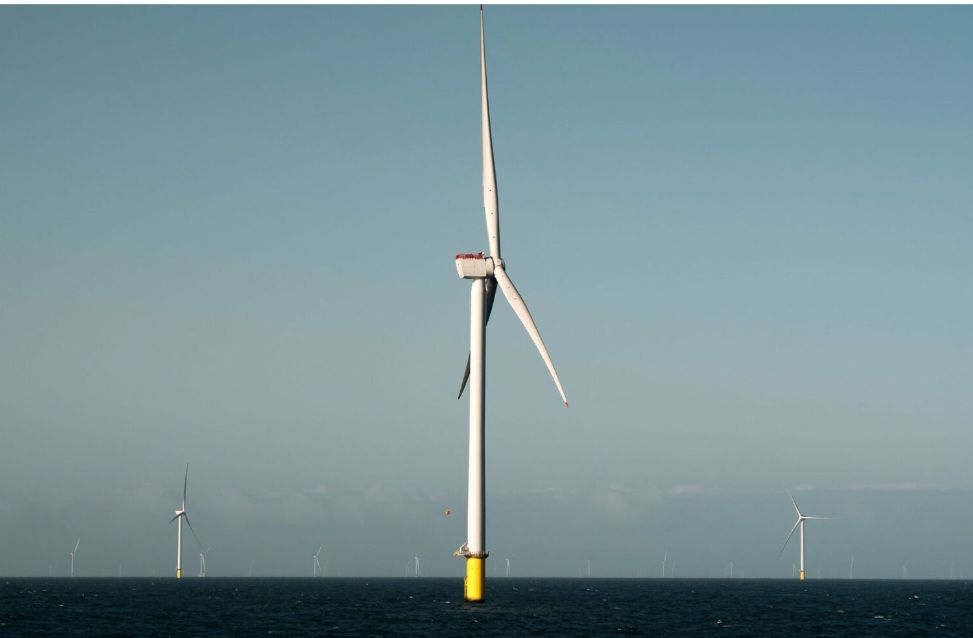
Teesside is becoming one of the UK’s major electricity landing points for offshore wind farms in the North Sea.
Projects like:
Dogger Bank Wind Farm
Sofia Offshore Wind Farm
will send huge amounts of electricity back to shore using giant undersea cables.
These are not ordinary cables.
They use something called HVDC (High Voltage Direct Current), which allows very large amounts of power to travel long distances efficiently from offshore wind farms back into Britain’s transmission network.
That electricity lands around the Teesside and Lackenby area before being converted and pushed into the National Grid system.
So Is It Already Working?
Partly — yes.
According to the EA Register:
Dogger Bank Project C connects in April 2025.
Sofia Offshore Wind Farm connects in January 2026.
That means the offshore transmission infrastructure itself is real and operational.
But this is where the public narrative becomes misleading.
The Grid Around It Is NOT Fully Ready
When politicians talk about “green energy hubs”, people imagine the whole system already exists.
But the EA Register shows the opposite.
The offshore wind arrives FIRST.
The grid upgrades arrive YEARS LATER.
The batteries arrive AFTER THAT.
The key reinforcement listed in the EA Register is:
South Tees Enhancement Phase 2
Connection date: 30 October 2033
Only after that do the giant battery projects appear:
NatPower Teesside Green Energy Park — 2035
NEL Lackenby BESS — 2035
That means some of the infrastructure being promoted today may not realistically operate at full intended scale until nearly a decade after the offshore wind starts generating.
Why This Matters
This completely changes the public understanding of how Britain’s Net Zero grid is being built.
Most people assume:
“The grid is ready, and renewables are simply plugging into it.”
But the EA Register suggests the reality is:
Build the wind farms first.
Upgrade the transmission network later.
Add giant batteries years afterwards to try to stabilise the system.
In other words: Britain is deploying generation faster than the supporting infrastructure can properly absorb it.
The 132kV Confusion
Some people looking at the EA Register will notice references to “132kV” connections and assume:
“That’s too small for a massive offshore wind farm.”
But the reality is more technical.
Projects like Sofia use dedicated HVDC transmission systems. These behave differently from traditional local power stations connected directly into regional AC lines.
The offshore system effectively acts like a giant controlled power pipeline into the national transmission network.
So yes , Sofia can deliver electricity.
But that does NOT mean the surrounding grid ecosystem is fully prepared for everything planned around it.
What Teesside Is REALLY Becoming
Teesside is no longer just an industrial area.
It is becoming:
an offshore wind landing zone,
a transmission conversion hub,
a battery storage corridor,
a balancing centre for the UK grid,
and potentially a future hydrogen and industrial electrification hub.
The scale is enormous.
But so are the risks.
The Bigger National Problem
Teesside is not unique.
The exact same pattern is emerging across Britain:
Thorpe Marsh
Creyke Beck
Brinsworth
Monk Fryston
All are seeing:
huge generation commitments,
delayed transmission reinforcements,
massive battery proposals,
and increasingly centralised control of electricity flows.
Britain’s old energy system was relatively simple: local generation serving local demand.
The new system is becoming: remote offshore generation, feeding giant transmission corridors, requiring huge balancing systems, with batteries attempting to stabilise intermittency years later.
The Question Nobody Wants to Ask
Can the UK realistically build:
the offshore wind,
the substations,
the HVDC systems,
the pylons,
the converter stations,
the transformers,
the batteries,
and the reinforcement network
fast enough to make the system stable and affordable?
The EA Register quietly suggests the answer may be far less certain than the public is being told.
Shane Oxer — Campaigner for fairer and affordable energy
 SAY NO TO THE DESTRUCTION OF OUR LAND
Leave a comment