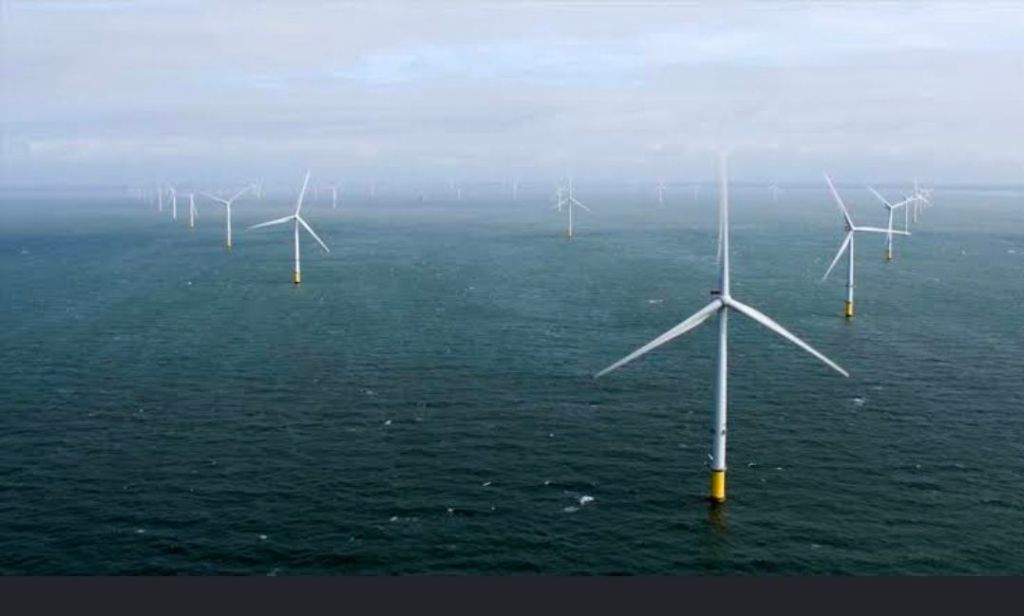
The UK can rightly claim real expertise in offshore wind. We have built ports, marine engineering capability, operations and maintenance bases, specialist supply chains, and a workforce with skills that should be treated as a national asset.
But that is only half the energy-security story.
A turbine at sea does not make Britain energy secure unless the power can be transmitted, balanced, stored, stabilised and delivered to homes, factories and industry when it is needed.
And that is where the whole argument starts to fall apart.
The Government’s own Clean Power 2030 plan accepts that the electricity network must undergo an unprecedented expansion. Around twice as much new transmission infrastructure is needed by 2030 as was built in the previous decade. It also identifies around 80 network and enabling infrastructure projects needed to make the clean power system work.
That is not a small gap. That is a system-level warning.
Ofgem has also acknowledged the delivery problem. Its latest electricity transmission performance reporting points to lower-than-expected delivery in the early RIIO-ET2 period, contractor and supply-chain constraints, limited outage availability, delayed work, and a compressed schedule for delivery.
In plain English: the grid is already playing catch-up.
That is why curtailment matters. In 2024/25, NESO reported that wind curtailment rose to 13% of hypothetical wind output. Wind is being turned down because large volumes of generation are located in constrained parts of the network, particularly Scotland, while replacement generation has to be turned up elsewhere to keep the system balanced.
By 2025, independent market analysis reported over 10TWh of renewable electricity curtailed in Great Britain — enough to supply domestic demand across London — with hundreds of millions paid in curtailment payments and at least £1bn more spent on upward actions to replace lost output.
That is not efficiency. That is a sign of a system built in the wrong order.
The industry talks about more turbines, more auctions, more supply-chain investment and more deployment. Fine. But where are the transformers? Where are the substations? Where are the transmission reinforcements? Where is the dispatchable backup? Where is the long-duration storage? Where is the grid stability plan? Where is the honest bill impact for consumers?
Even the grid connection reforms prove the scale of the problem. The queue had grown into hundreds of gigawatts of projects, many of them speculative, because generation ambitions were allowed to run far ahead of physical system capacity. Reform may help, but reform does not build a substation, install a transformer, consent a transmission line, or remove a constraint overnight.
So yes, celebrate British offshore wind expertise. Celebrate the welders, engineers, marine crews, port workers and manufacturers.
But do not confuse deployment with delivery.
A secure energy system is not measured by how many turbines we announce. It is measured by whether affordable electricity reaches the consumer reliably, at the right time, through a grid that can actually handle it.
Britain has spent years prioritising generation targets, subsidy rounds and press releases while the grid, storage and system-stability infrastructure lagged behind.
That is why the right principle is simple:
Grid first.
System stability first.
Reliable backup first.
Then build generation where the network can actually use it.
Until then, offshore wind will remain a partial success trapped inside a badly sequenced national energy strategy.
A turbine that cannot reliably get its power to homes and industry is not energy security.
It is an expensive monument to poor planning.
Shane Oxer — Campaigner for fairer and affordable energy
 SAY NO TO THE DESTRUCTION OF OUR LAND
Leave a comment