Britain is changing Prime Ministers with increasing frequency, yet the direction of government barely changes.
Each new leader arrives promising renewal. They speak of a new approach, new priorities and a government prepared to listen to the public. But within months, the language changes. Promises are diluted, policies are abandoned and the new Prime Minister begins defending the same institutional consensus as their predecessor.
The individual changes. The governing system does not.
This is one reason British Prime Ministers are becoming increasingly disposable. They are elected or appointed to lead, but rapidly discover that much of the direction of government has already been determined.
Parliament remains sovereign.But increasingly refuses to govern
In constitutional theory, Parliament is sovereign. It can make or repeal any law. It can reform regulators, abolish public bodies, change taxation, alter energy policy and remove statutory targets.
But legal sovereignty is not the same as practical control.
Over several decades, Parliament has transferred increasing amounts of political discretion into:
– legally binding targets;
– independent regulators;
– statutory advisory bodies;
– international agreements;
– judicially enforceable duties;
– delegated legislation;
– long-term contracts;
– Treasury rules;
– administrative guidance;
– and permanent civil-service structures.
Parliament still passes legislation, but much of that legislation instructs future governments to follow a predetermined course.
It therefore remains sovereign in principle while becoming increasingly constrained by its own previous decisions.
The Climate Change Act illustrates the problem
The Climate Change Act did not simply declare that reducing emissions was desirable. It created a statutory framework requiring governments to meet long-term emissions targets and legally established carbon budgets.
Once those obligations were placed in law, energy policy ceased to be an entirely open political question.
An incoming government may wish to prioritise energy affordability, domestic industry, national resilience or technological neutrality. However, it must develop those policies within an existing legal framework centred on carbon reduction.
The Climate Change Committee then advises government on the pathway required to meet those targets. Its recommendations influence energy generation, transport, housing, heating, agriculture, industrial policy and infrastructure.
The Committee does not formally pass laws. It does not command Parliament. Ministers remain legally responsible for decisions.
But its influence is substantial because the statutory destination has already been fixed.
When the law establishes the destination, the supposedly independent adviser has enormous power over the route.
Government departments then produce policies designed to follow that route. Regulators interpret their responsibilities through it. Businesses invest on the assumption that it will continue. Campaign organisations use it to challenge government decisions. Courts can be asked to examine whether ministers have complied with their legal duties.
A future Prime Minister therefore inherits not merely a policy but an entire political, legal, financial and administrative structure.
New leaders encounter the limits of office
A leadership candidate can promise almost anything during an internal election or general-election campaign.
They can promise cheaper energy, lower taxes, greater housebuilding, stronger borders, industrial renewal, planning reform or a reduction in regulation.
Once in office, however, they encounter the accumulated constraints of the state.
They are told that a proposal may breach an existing statutory duty.
They are warned that changing direction could create a judicial-review risk.
They are advised that regulators, investors or international partners expect continuity.
They are told that contracts have already been signed, spending has already been committed and departmental plans have already been constructed around the existing framework.
The Prime Minister may technically possess the authority to challenge these arrangements. But doing so requires political courage, parliamentary support, administrative preparation and a willingness to confront the institutions that shape conventional government thinking.
Most leaders retreat.
They do not necessarily abandon their ideas because they have been persuaded that those ideas were wrong. They abandon them because the political cost of confronting the system appears greater than the cost of disappointing the public.
The leader becomes the pressure-release valve
When government fails to deliver, public anger focuses on the Prime Minister.
The governing party then concludes that replacing the leader will restore confidence.
A new personality is presented. A new slogan is adopted. A new Downing Street team is appointed. Ministers promise that lessons have been learned.
Yet the underlying legal and institutional structure remains largely untouched.
The cycle therefore begins again:
Promises are made.
Institutional resistance follows.
Policies are weakened.
Public trust declines.
The governing party panics.
The Prime Minister is replaced.
The system continues.
Changing Prime Ministers becomes a substitute for changing government.
This does not remove responsibility from politicians
It would be wrong to suggest that Parliament is powerless or that quangos have simply seized control.
Parliament created many of these bodies. Parliament approved the legislation. Governments appointed the officials. Ministers accepted the advice. MPs repeatedly voted to preserve the system.
The deeper failure is therefore political.
Parliament has given away discretion while retaining the appearance of responsibility. Politicians complain about institutional constraints while refusing to repeal the laws that created them.
They tell voters that difficult decisions are unavoidable, even though many of those decisions arise from choices made by previous Parliaments.
The result is a system in which accountability becomes blurred.
Ministers blame inherited obligations.
Departments point to legislation.
Regulators point to their statutory duties.
Advisory bodies insist that they only provide advice.
Courts state that they are merely interpreting the law.
Parliament claims that government must act.
Everyone participates in governing, but no one accepts complete responsibility for the outcome.
Why this destabilises Prime Ministers
A Prime Minister is expected to carry responsibility for everything, while exercising full control over comparatively little.
They are held responsible for energy bills, immigration, public services, housing, economic growth and national infrastructure. But every major area is surrounded by statutory frameworks, regulators, spending commitments, legal duties and administrative constraints.
The public sees a powerful Prime Minister.
The person in office discovers a heavily restricted executive.
That gap between public expectation and governing reality destroys political authority.
When the Prime Minister cannot deliver, their own party begins to see them as the problem. Yet removing the Prime Minister does not remove the restrictions. The successor inherits the same Treasury, the same regulators, the same legislation, the same advisers and the same statutory obligations.
The failure is personalised when it is actually structural.
Parliament must choose whether it wishes to govern
The answer is not simply to find a stronger Prime Minister.
A determined leader may challenge the institutional consensus, but no Prime Minister can permanently restore democratic government without Parliament.
Parliament must decide whether major questions should remain politically contestable.
Energy policy should be capable of changing after an election.
Carbon budgets should be openly debated against affordability, reliability, national security and industrial consequences.
Regulators and advisory bodies should provide evidence and options, not determine the limits of acceptable political thought.
Long-term statutory targets should not be used to prevent future generations from choosing a different course.
Ministers should be clearly accountable for decisions, rather than sheltering behind advice from supposedly independent organisations.
Most importantly, MPs must accept responsibility for governing.
They cannot continue surrendering power to permanent institutions and then blaming individual Prime Ministers when the public becomes dissatisfied.
Britain does not merely have a leadership crisis.
It has a crisis of parliamentary government.
Until Parliament reclaims the authority it has delegated, Prime Ministers will continue to rise and fall. Each will promise a new beginning, discover the same constraints and eventually be sacrificed for failing to change a system they were never prepared to confront.
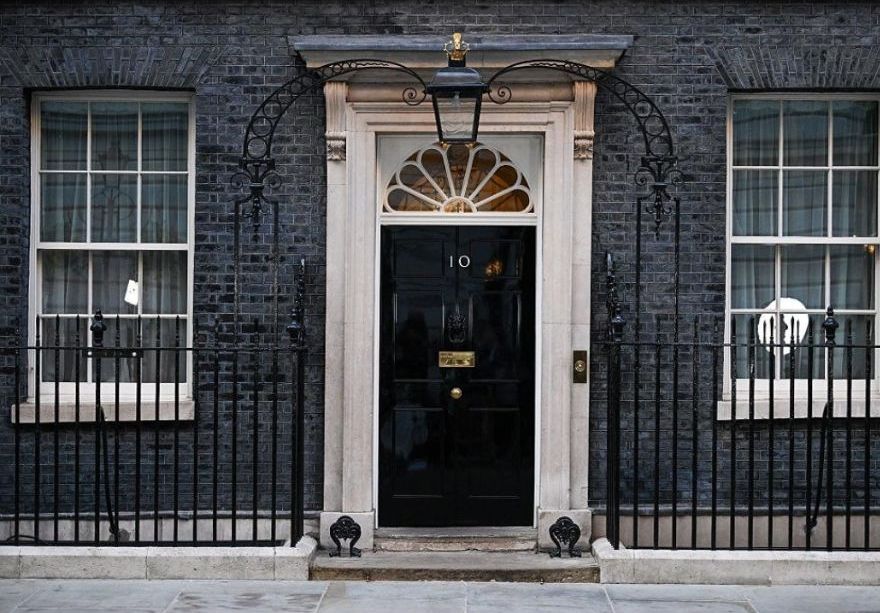
The names above the door of Number 10 will keep changing.
The direction of government will remain the same.
Shane Oxer. Campaigner for fairer and affordable energy
 SAY NO TO THE DESTRUCTION OF OUR LAND
Leave a comment