Bradford Council says communities are being consulted on an “abstract concept” — yet the Calderdale Wind Farm already appears in grid/TWR-linked data as a 312MW project. That raises serious questions about transparency, timing and trust.
There is a growing problem with the Calderdale Energy Park proposal on Walshaw Moor.
It is not just the scale of the scheme. It is not just the 34 giant turbines proposed between Hebden Bridge and Haworth. It is not just the threat to peatland, blanket bog, moorland habitat, flood resilience, Brontë country and the wider Pennine landscape.
It is the process.
According to the Bradford Telegraph & Argus report by Local Democracy Reporter John Greenwood, Bradford Council has issued a highly critical response to the consultation process for Calderdale Energy Park. Although the proposed turbines would sit within Calderdale, the impacts would not stop at the district boundary. Bradford would be directly affected through landscape impacts, cultural heritage impacts, tourism impacts, biodiversity concerns and, crucially, the proposed cabling corridor.
Bradford Council’s criticism is damning. It says local communities and the council have effectively been consulted on an “abstract concept” rather than a transparent and scientifically robust infrastructure design.
That phrase matters.
Because while residents are being asked to respond to a supposedly preliminary consultation, grid-linked data already appears to identify the project in far more concrete terms.
The data screenshots show:
Project name: Calderdale Wind Farm 312MW
Project number: PRO-004714
Account name: Calderdale Wind Farm Ltd
Connection site: Leeds North Connection Substation
Linked works / TWR context: West Yorkshire / Leeds-Wakefield dispersed layer
Date shown: 2035-10-30
Risk note: TWR work date falls after 2030
This does not mean the project has been approved. It does not mean the Development Consent Order has been granted. But it does show something very important: the scheme already appears to exist within the grid connection and transmission works environment as a named 312MW project with a project number, company account, connection site and future network dependency.
That raises a serious question.
If the project is already sufficiently defined to appear in grid/TWR-linked data, why are communities being consulted on what Bradford Council describes as an abstract concept?
The public should not be asked to comment in the dark.
For a project of this scale, the consultation should disclose the full picture. That means the turbine locations, access routes, compound areas, cabling corridor, grid connection route, substation relationship, construction impacts, peatland disturbance, hydrological risks, flood implications, landscape effects, cultural heritage impacts and realistic grid connection timescale.
Instead, Bradford Council says key information is being deferred until a later Environmental Statement stage. That is not good enough.
The cabling corridor alone is a major issue. If infrastructure associated with the wind farm is to pass through Bradford district, then Bradford residents, parish councils, businesses, landowners and heritage groups have a right to understand the full implications now — not after the consultation has closed and the project has already gathered momentum.
There is also a major timing issue.
The project is being promoted as a low-carbon energy scheme that could generate enough electricity for 198,000 homes a year. But the TWR-linked data shown in the screenshots includes a 2035-10-30 date and a risk note indicating that the TWR work date falls after 2030.
That matters because national energy policy is being driven by the political target of Clean Power by 2030. If the associated grid works for this project appear to fall after 2030, then communities are entitled to ask whether this scheme is truly deliverable within the timeframe being implied by national policy rhetoric.
Is Walshaw Moor being sacrificed for a project whose full grid infrastructure may not be ready until years after the political target date?
That question must now be answered.
The environmental questions are even more serious.
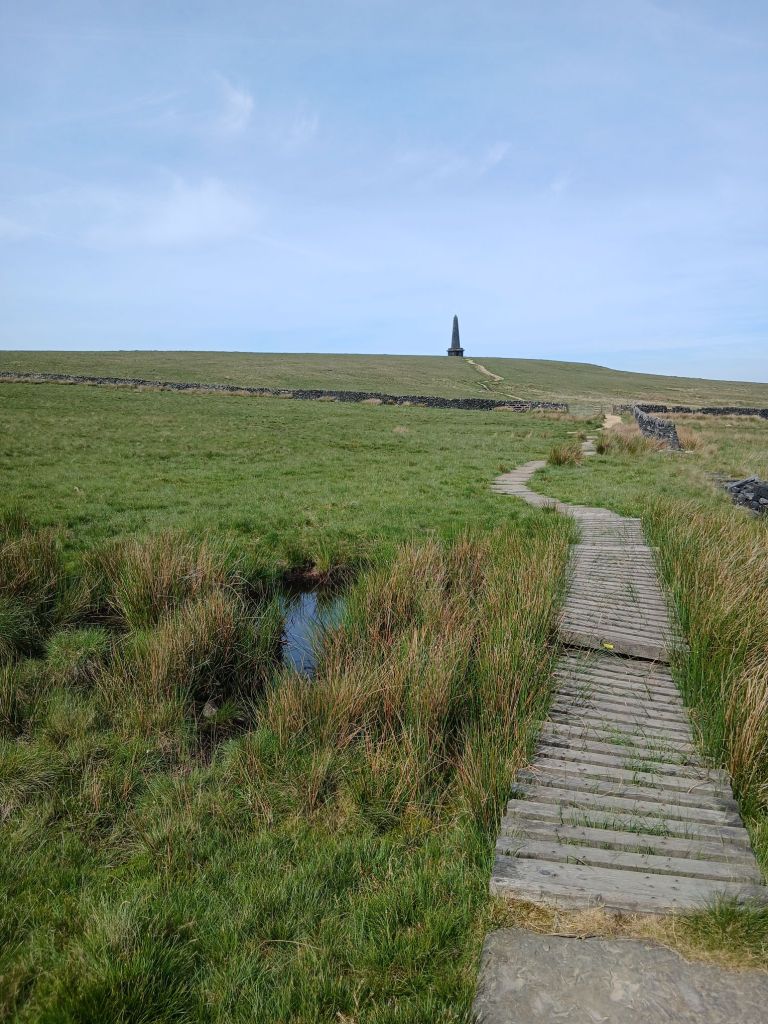
Walshaw Moor is not empty land. It is part of a sensitive upland landscape with peat, blanket bog, habitat, bird life, hydrological function and cultural meaning. Moorland is not merely scenery. It stores carbon. It holds water. It supports wildlife. It protects downstream communities from flood risk when properly functioning.
Disturbing peatland for industrial-scale wind infrastructure can create consequences that last for generations. Roads, turbine bases, crane pads, cabling trenches and construction access routes can alter drainage patterns, fragment habitat and damage carbon-rich soils. Once deep peat is damaged, it is not easily restored.
That is why the quality of the environmental information is so important.
Bradford Council is not alone in raising concerns. CPRE West Yorkshire has also criticised the proposal, including the quality of the Preliminary Environmental Information Report, the potential impact on peatland and habitat, the effect on Brontë country, flood risk and the significance of the King’s Bradford Pennine Gateway National Nature Reserve designation.
CPRE has reportedly asked for the proposal to be withdrawn or fundamentally relocated away from Walshaw Moor.
That is a powerful intervention.
The developer says it has complied with legal requirements, that more than 1,000 responses have been received, and that feedback will inform the final design. But compliance with minimum process is not the same as meaningful democratic consent.
A consultation is only meaningful if people have enough information to understand what is really being proposed.
Here, the core objection is simple.
Residents appear to be facing two different versions of the same project.
In public consultation, the scheme is presented as still evolving, with important details left for later.
In grid-linked data, the same project appears as Calderdale Wind Farm 312MW, with a named company, project number, connection site and post-2030 linked works context.
That gap must now be closed.
Before this project goes any further, Calderdale Energy Park should be required to publish a full grid and infrastructure disclosure statement. This should include the confirmed or proposed connection route, the role of Leeds North Connection Substation, all TWR-linked dependencies, the meaning of the 2035 date, any reinforcement assumptions, any curtailment risk, and the complete cabling corridor through Bradford and surrounding areas.
Bradford Council’s position should be supported.
The council is right to say that the current consultation is not adequate if it fails to provide the technical detail needed to assess the true impacts. Calderdale residents, Bradford residents and communities across Brontë country deserve more than glossy claims about clean energy. They deserve full disclosure.
The Energy Secretary, Ed Miliband, will ultimately decide whether this project is granted consent. That makes the transparency issue even more important.
No minister should approve an industrial-scale energy project on sensitive moorland unless the public consultation has been full, fair and properly informed.
No community should be expected to accept irreversible landscape and peatland damage on the basis of incomplete environmental information.
And no developer should be allowed to consult the public on an “abstract concept” while grid records already show a defined 312MW project sitting in the system.
This is not just about Walshaw Moor.
It is about whether rural and upland communities are being properly respected in the rush to meet political energy targets. It is about whether environmental protection still means anything when the project carries a green label. It is about whether consultation is a genuine democratic process or merely a box-ticking exercise before decisions already moving through the infrastructure system become unstoppable.
The people of Calderdale, Bradford, Haworth, Hebden Bridge and the wider Pennine landscape deserve answers.
They deserve to know exactly what is being built, where the power will go, what infrastructure is required, when the grid will actually be ready, what land will be disturbed, what peat will be damaged, what habitats will be lost, what views will be changed and what risks will be passed on to future generations.
Until those answers are provided, this proposal should not proceed.
Walshaw Moor is too important to be treated as a spreadsheet entry.
Bronte country is too important to be reduced to a transmission corridor.
And communities are too important to be consulted after the real decisions have already started to take shape elsewhere.
Shane Oxer. Campaigner for fairer and affordable energy
 SAY NO TO THE DESTRUCTION OF OUR LAND
Leave a comment