Why Green Belt Must Always Mean Green Belt
There is a battle taking place across Britain’s countryside.
It is not always fought with loud voices. It is not always announced with banners, slogans, or dramatic headlines. More often, it arrives quietly, wrapped in planning language, environmental claims, corporate presentations, consultation boards, policy documents, and promises of a cleaner future.
But beneath the soft words lies a hard truth.
The countryside is being asked to pay the price for decisions made by people who do not live with the consequences.
This is the battle of the gray blob versus the greenery.
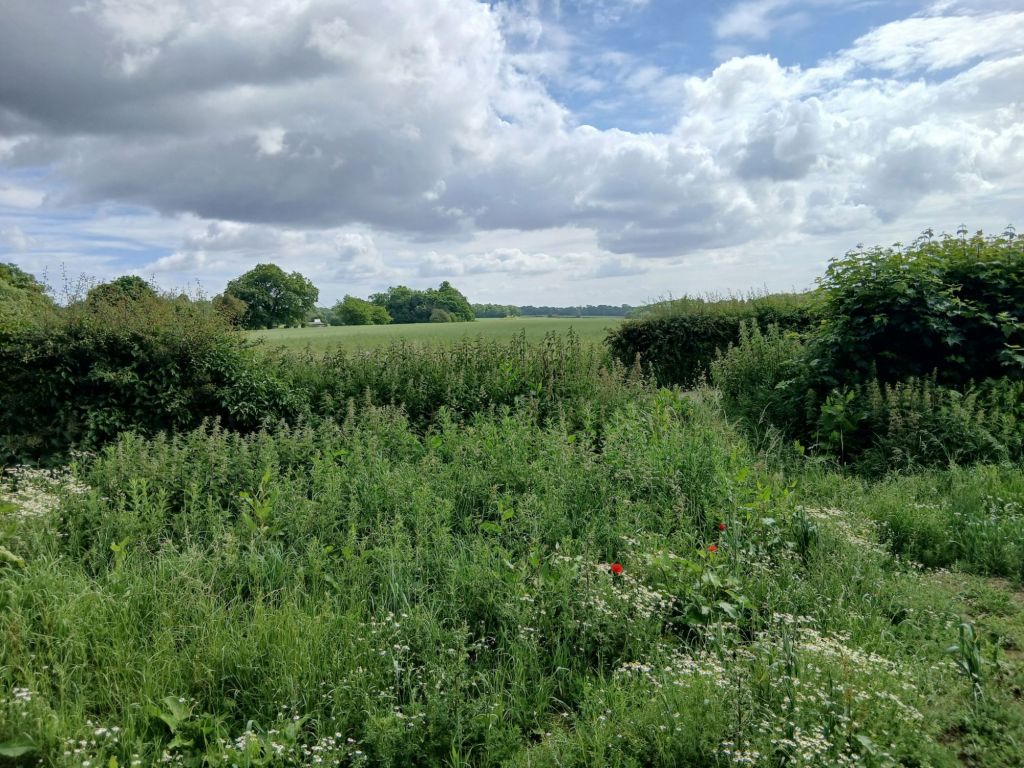
The greenery is what Britain has always known in its bones. It is the fields, farms, hedgerows, hillsides, moors, woodlands, rivers, meadows, lanes, villages, footpaths, and open skies that give this country its character. It is the soil that feeds us, the landscape that steadies us, and the natural world that reminds us we are not above creation but part of it.
Green belt should mean exactly what it says.
Green belt is not spare land.
Green belt is not empty land.
Green belt is not a blank space on a developer’s map.
It is land with purpose, memory, beauty, and life.
It is the view from a kitchen window that has calmed generations. It is the field a farmer has worked through frost, rain, drought, and uncertainty. It is the hedgerow where birds nest, the grass where livestock graze, the path where families walk, the hillside that marks the edge of a community, and the open space that stops one town from being swallowed by another.
Green belt is fields.
Green belt is farms.
Green belt is hillsides.
Green belt is moors.
Green belt is mountains.
Green belt is countryside.
And it should remain so.
Yet against this greenery comes the gray blob.
The gray blob is not just concrete, steel, fencing, tarmac, substations, pylons, access roads, industrial compounds, and glass panels stretching across once-open land. The gray blob is also a mindset.
It is the mindset of city dwellers who look at the countryside from a distance and see not life, but “capacity.” It is the mindset of bureaucrats who live in concrete jungles yet feel entitled to dictate what happens to rural communities they barely understand. It is the mindset of corporations who speak the language of sustainability while pursuing profit from the destruction of beauty. It is the mindset of those who believe that anything green can be sacrificed, provided the paperwork says it is being done in the name of being green.
This is the great insult being forced upon the countryside.
We are told that the environment must be saved by destroying the environment.
We are told that green fields must be covered, fenced off, industrialised, and connected to vast infrastructure in order to protect nature. We are told that productive farmland can be replaced with promises. We are told that landscapes shaped over centuries can be transformed into energy zones, development corridors, and grid assets. We are told that the countryside must become a machine.
And if ordinary people object, they are dismissed as emotional, backward, selfish, or misinformed.
But there is nothing backward about loving the land.
There is nothing selfish about defending the soil that feeds the nation. There is nothing misinformed about understanding that nature cannot be protected by burying it under infrastructure. There is nothing extreme about saying that green belt should remain green.
The people who live in rural communities know what greenery is because they live among it. They see the seasons change. They see the fields worked. They see the floods gather where land has been mistreated. They see the birds, the trees, the lanes, the farmyards, and the quiet value of open space. They know that countryside is not simply scenery. It is a living system.
Nature needs to be natural.
It needs to be respected, nourished, and protected. It does not need to be branded, monetised, fenced, flattened, and sold back to the public as progress. It does not need to be reduced to a spreadsheet calculation, a biodiversity offset, or a corporate promise that one patch of damage can be balanced by another patch of planting elsewhere.
You cannot destroy a landscape and call it environmentalism.
You cannot smother farmland and call it sustainability.
You cannot erase beauty and call it progress.
This is why the phrase “green belt” matters. It is not merely a planning term. It is a promise. It is a line drawn in defence of restraint. It says there must be places that are not endlessly available for development. It says that some land has a value beyond money. It says that future generations deserve more than concrete, fencing, cables, substations, warehouses, industrial solar fields, and excuses.
Once the gray blob gets involved, the language always changes.
Fields become “sites.”
Villages become “receptors.”
Landscape becomes “visual impact.”
Wildlife becomes “mitigation.”
Farmland becomes “land parcels.”
Communities become “stakeholders.”
Destruction becomes “delivery.”
This is how beauty is stripped of meaning before it is stripped from the land.
The gray blob does not understand belonging. It does not understand the deep connection between people and place. It does not understand that a view can be part of someone’s life, that a field can carry history, that a hillside can define a community, or that a quiet lane can matter more to local people than any corporate presentation ever will.
The gray blob sees only opportunity.
Opportunity for profit.
Opportunity for control.
Opportunity for targets.
Opportunity for political virtue.
Opportunity for more schemes, more contracts, more infrastructure, more pressure, more gray.
But the greenery asks for something different.
It asks for humility.
It asks for respect.
It asks for stewardship.
It asks us to remember that not everything valuable can be measured in money.
It asks us to protect what we still have before it is too late.
The countryside is not against the future. Rural communities are not against sensible energy, cleaner technology, or proper environmental protection. But they are against hypocrisy. They are against being lectured by those who consume the benefits while exporting the damage. They are against policies that turn villages into sacrifice zones. They are against a system that calls itself green while turning the countryside gray.
If the future is truly green, it should begin by protecting greenery.
It should protect farmland.
It should protect hedgerows.
It should protect ancient landscapes.
It should protect moors, hillsides, woodlands, and open spaces.
It should protect the people who live closest to the land and understand its value.
The answer to environmental damage cannot be more environmental damage. The answer to climate concern cannot be the industrialisation of every open field. The answer to energy need cannot be the destruction of the very countryside that makes Britain worth defending.
This is the present battle.
The gray blob has come to the countryside claiming to save the environment. But in too many places, what it brings is not salvation. It brings fencing, concrete, steel, cables, roads, substations, and the slow erasure of natural beauty.
It brings grayness.
And against that, we must speak for the greenery.
We must speak for the fields before they are fenced.
We must speak for the farms before they are buried under policy.
We must speak for the hillsides before they are scarred.
We must speak for the moors before they are industrialised.
We must speak for the villages before they are surrounded.
We must speak for nature before nature is reduced to a planning condition.
Green belt must always mean green belt.
Not gray belt.
Not industrial belt.
Not corporate opportunity belt.
Not bureaucratic sacrifice belt.
Green belt.
Greenery is not an obstacle to progress. It is the foundation of a civilised country. It feeds us, calms us, shelters wildlife, shapes communities, and connects us to something older and greater than ourselves.
Once it is gone, no planning promise can truly bring it back.
That is why this battle matters.
Because if we allow the gray blob to consume the greenery in the name of saving it, we will have lost more than land.
We will have lost our sense of place.
We will have lost our respect for nature.
We will have lost the courage to say that some things are too precious to destroy.
And Britain will be poorer, uglier, and grayer for it.
Shane Oxer. Campaigner for fairer and affordable energy
 SAY NO TO THE DESTRUCTION OF OUR LAND
Leave a comment