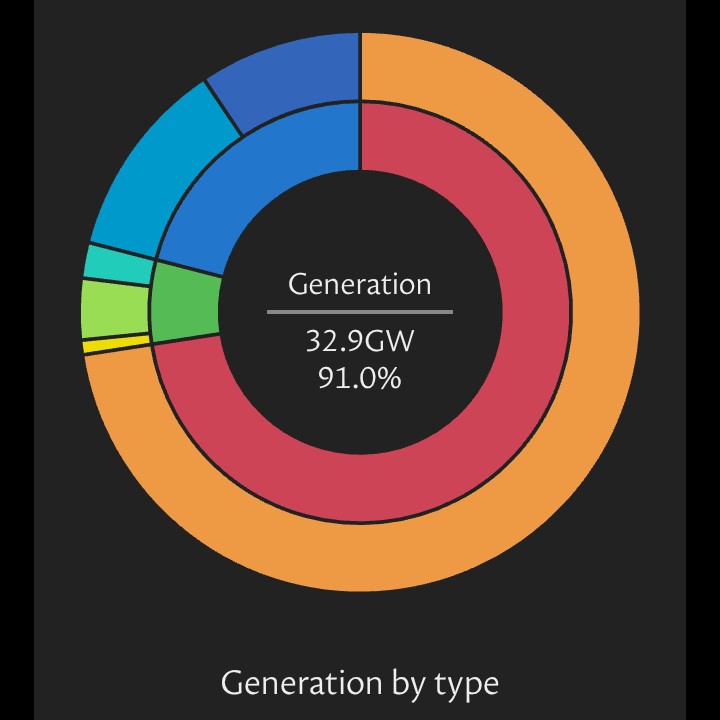
Canada has just exposed the flaw at the heart of Britain’s energy policy: national energy security cannot be built on climate slogans, imported dependency, and grid fantasy.
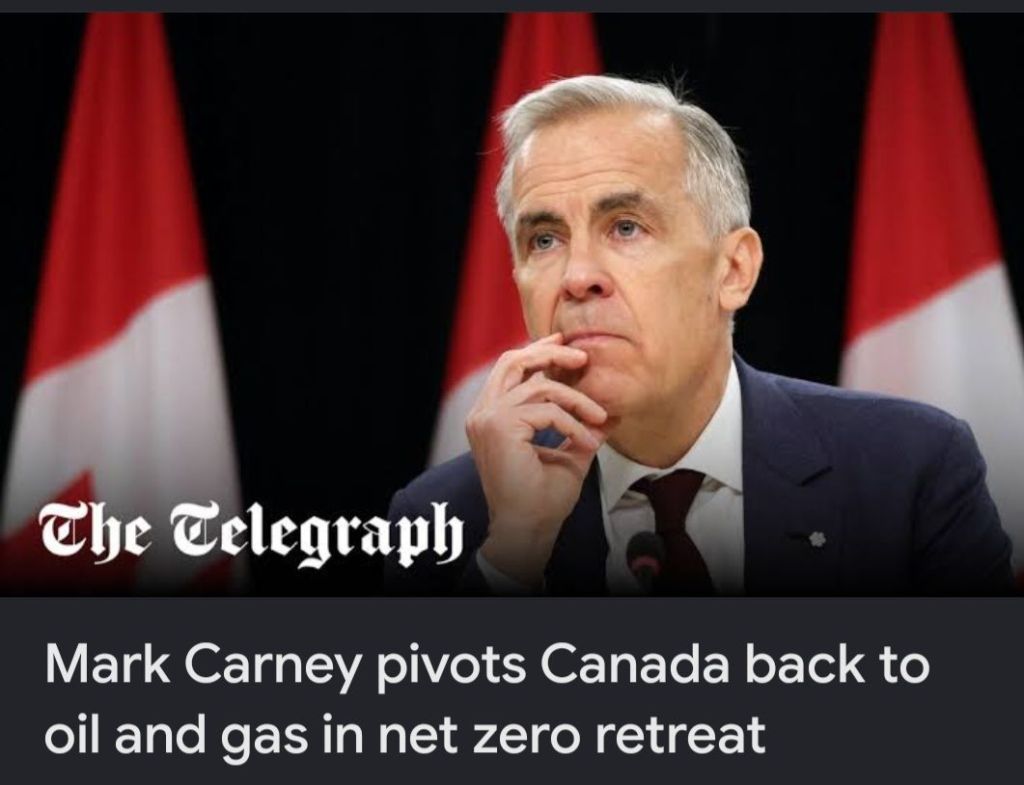
There are moments in politics when a single decision cuts through years of spin. Mark Carney’s reported pivot back towards oil and gas in Canada is one of those moments.
This matters because Carney is not a climate sceptic. He is not a long-standing critic of net zero. He was one of the global architects of climate finance, a former Governor of the Bank of England, a former UN climate finance envoy, and the founder of the Glasgow Financial Alliance for Net Zero. If anyone represented the financial establishment’s march towards decarbonisation, it was Mark Carney.
Yet now Canada is backing a major new west coast oil pipeline from Alberta to the Pacific coast, designed to boost exports to Asia and reduce dependence on the United States. Reuters reports the project is intended to carry around one million barrels of oil per day, with construction targeted from 2027. The Guardian has also reported that the plan forms part of a wider energy and infrastructure settlement involving pipeline expansion, port upgrades, LNG development, and Indigenous participation.
The Guardian
That is not a minor adjustment. It is a major strategic correction.
Canada has looked at the world as it actually is , unstable, competitive, energy-hungry, and geopolitically dangerous , and decided that energy security, affordability and national resilience must come before short-term climate purity.
So the question for Britain is obvious:
When will Ed Miliband realise he has got this so badly wrong?
The British Government still insists that Clean Power 2030 will deliver energy security, protect billpayers, create jobs and make Britain a clean energy superpower. The official government mission says it will deliver clean power by 2030 and accelerate to net zero, while protecting consumers from price shocks and keeping bills down. The Clean Power 2030 Action Plan, led by Ed Miliband’s department, describes the transition as central to Britain’s energy future.
But the lived reality for households, businesses, farmers and industry tells a different story.
Britain is being pushed into a system built around weather-dependent generation, vast new grid infrastructure, imported components, battery projects, solar sprawl, pylons, substations and ideological targets. At the same time, domestic gas production is politically discouraged, nuclear has been delayed for decades, coal was closed before replacement resilience was secured, and communities are being told to accept industrial-scale energy schemes across countryside and farmland.
This is not energy security. It is energy dependency dressed up as virtue.
Carney’s Canada appears to have understood something Miliband still refuses to accept: a modern industrial economy cannot run on aspiration. It needs firm power. It needs dispatchable generation. It needs fuel security. It needs infrastructure that exists, not infrastructure promised in glossy reports. It needs a policy that works in winter, not just in summer press releases.
The fatal flaw in Miliband’s approach is that he treats net zero as the objective and energy security as a consequence. In reality, it must be the other way round.
Energy security should be the foundation. Affordability should be the test. Industrial strength should be the outcome. Environmental improvement should be achieved through technology, efficiency, nuclear, cleaner domestic production and innovation , not by weakening the country’s energy base.
Canada is not abandoning environmental standards. The reports make clear that the pipeline proposal is being presented alongside methane reduction, carbon capture, LNG expansion, port upgrades and Indigenous ownership or participation.
But Canada is recognising that oil and gas still matter. It is recognising that exports matter. It is recognising that national leverage matters. It is recognising that affordability matters.
The Guardian
The Wall Street Journal
Britain should be doing the same.
Instead, Miliband’s strategy risks locking Britain into higher costs, greater grid fragility and deeper reliance on imported energy systems. We are told that more wind and solar will shield us from global gas markets. But intermittent electricity does not remove the need for reliable backup. Solar produces least when Britain needs power most. Wind can collapse during still winter periods. Batteries can smooth short periods, but they cannot carry a country through prolonged Dunkelflaute conditions. Meanwhile, every extra layer of intermittent generation demands more grid reinforcement, more balancing, more constraint payments, more storage, more substations, and more hidden cost.
This is the part the public is rarely told.
The cost of net zero is not just the turbine or the solar panel. It is the grid behind it. It is the backup plant. It is the balancing mechanism. It is the curtailment payment. It is the battery site. It is the transmission upgrade. It is the new pylon route. It is the loss of farmland. It is the planning conflict. It is the industrial electricity price. It is the standing charge. It is the factory that never opens because power is too expensive.
Miliband talks about clean energy as if it is automatically cheap energy. It is not. Cheap electricity comes from a system that is reliable, balanced, properly engineered and not overburdened by ideological design constraints.
That is why Carney’s pivot is so politically damaging for Britain’s net zero establishment. If even one of the world’s leading climate finance figures can admit that oil and gas still have a central role in national prosperity, then Miliband’s absolutism looks less like leadership and more like denial.
Britain does not need to copy Canada blindly. Our geography, resources and grid are different. But the principle is universal: no serious country sacrifices energy security to satisfy a legally imposed climate timetable.
The UK should be pursuing a hard-headed energy strategy based on five principles.
First, domestic energy production must be treated as a national security asset. That means North Sea oil and gas should not be politically strangled while Britain continues to import fuel from abroad. Producing less at home does not abolish demand. It simply exports jobs, tax revenues, security and environmental accountability.
Second, nuclear must return to the centre of policy. Large nuclear and small modular reactors offer the firm, high-density, low-carbon electricity that Britain needs. They produce power when the country needs it, not merely when the weather allows it.
Third, the grid must be rebuilt around reliability, not ideology. Britain needs proper investment in resilient AC generation, substations, transformers, synchronous stability and strategic reinforcement. The grid should serve the country, not become a dumping ground for every speculative renewable project chasing subsidy, contracts or planning advantage.
Fourth, rooftop and industrial-site solar should be prioritised over the destruction of farmland. If solar has a role, it should be on roofs, warehouses, car parks, brownfield sites and local microgrid systems — not spread across productive countryside while Britain imports more food.
Fifth, carbon targets must be subordinated to national interest. The Climate Change Act, carbon budgets and the Climate Change Committee have created a policy machine that pressures governments to hit abstract emissions pathways even when the practical consequences are damaging.
That machinery must be challenged.
Carney’s move shows that the political ground is shifting. Across the democratic world, voters are no longer willing to accept higher costs, weaker industries and reduced living standards in the name of distant climate promises. Energy policy is becoming real again. Security is returning. Affordability is returning. Industrial strategy is returning.
The danger for Britain is that Miliband remains trapped in yesterday’s argument.
He still appears to believe that if government moves fast enough, spends enough, plans enough, and overrides enough local opposition, reality will bend to the net zero timetable. It will not.
Physics does not care about manifestos. The grid does not care about speeches. A cold, still winter evening does not care about climate finance slogans.
Canada has just sent a message to the world: energy security comes first.
Britain should listen.
Because when even Mark Carney is retreating from net zero absolutism, Ed Miliband is no longer leading the future. He is defending a failing ideology.
And the British people are being asked to pay for it.
Shane Oxer. Campaigner for fairer and affordable energy
 SAY NO TO THE DESTRUCTION OF OUR LAND
Leave a comment