Barnsley councillors have delivered a clear and important message: South Yorkshire’s remaining countryside is not simply vacant land waiting to be industrialised.
On 14 July 2026, members of Barnsley Council’s Planning Regulatory Board rejected Enviromena’s proposed Grimethorpe Solar Farm. The decision went against the recommendation of the council’s planning officers, who had advised that permission should be granted.
The application, reference 2024/1096, sought permission for a 49.9MW ground-mounted solar development on land to the east and west of Engine Lane, between Grimethorpe and Cudworth. The total application site extended across approximately 90 hectares, with more than 65 hectares intended to be enclosed within the solar development. The proposed operational period was 40 years.
The Barnsley Chronicle described it as the largest solar-farm proposal Barnsley had faced. Yet despite the officer recommendation and the familiar promises of renewable electricity, biodiversity improvements, business rates and community benefits, councillors decided that the development should not proceed.
This was not an isolated decision.
It was the second Enviromena solar application to be rejected by a South Yorkshire council in seven months.
Marr Came First
On 16 December 2025, Doncaster Council’s Planning Committee unanimously rejected Enviromena’s proposed Marr Solar Farm.
That scheme would have covered approximately 77 hectares of agricultural and Green Belt land with a 40MW solar installation, including 13 transformers and two substations. It was intended to remain in operation for 40 years.
Once again, planning officers had recommended approval.
Once again, councillors listened to the affected community and reached a different conclusion.
The Doncaster Free Press reported that the Marr application generated more than 1,270 representations. A local campaigner told the committee that the land had produced potatoes, wheat and barley, while concerns were also raised about the rural character of Marr, the setting of its conservation area and the effect upon Marr Grange Farm Shop and Tea Rooms.
After two hours of statements, questions and debate, councillors concluded that the claimed benefits did not clearly outweigh the damage that would be caused.
Enviromena announced that it would appeal the Marr decision, arguing that the committee had rejected the professional advice of its own planning officers.
The company may now respond in a similar way at Grimethorpe. But before another appeal is launched and another local decision is challenged, Enviromena and the wider solar industry should stop and consider what these two refusals are really saying.
South Yorkshire Is Not an Empty Canvas
Developers appear to look at South Yorkshire and see available land, convenient grid infrastructure and communities that can be persuaded with carefully prepared presentations about investment, biodiversity and community funds.
What they fail to understand is the history of the land and the people who live upon it.
South Yorkshire has undergone centuries of physical and industrial transformation.
Coal mining was taking place around Brierley from at least the seventeenth century. Deep mining at Grimethorpe began with the opening of Grimethorpe Colliery in 1895, transforming the population, economy and physical character of the surrounding area.
Generations lived beside pits, railway sidings, spoil heaps, industrial works and heavy traffic. Communities supplied the coal and steel that powered Britain. They endured smoke, dust, subsidence, industrial pollution and dangerous working conditions.
Grimethorpe Colliery was the economic heart of the community for almost a century. The last coal was cut in the early 1990s, and the pit was subsequently demolished. Its closure brought not only the loss of an industry but profound economic and social upheaval.
The countryside and open land that people see today did not simply appear untouched from the past. Much of the wider South Yorkshire coalfield has been reclaimed, restored or allowed gradually to recover following decades of intensive industrial activity.
Trees matured. Hedgerows returned. Footpaths were reopened. Former industrial landscapes began to look green again.
These places became breathing spaces between communities that had once been surrounded by heavy industry.
That greenery is not worthless because it has an industrial history.
Its recovery is precisely what makes it valuable.
Restored Land Is Not Disposable Land
There is a dangerous assumption within modern planning that previously disturbed, restored or former mining land somehow carries less environmental or social value.
It is treated as if one form of industrial use can simply be replaced by another.
But restored countryside is not a planning vacancy.
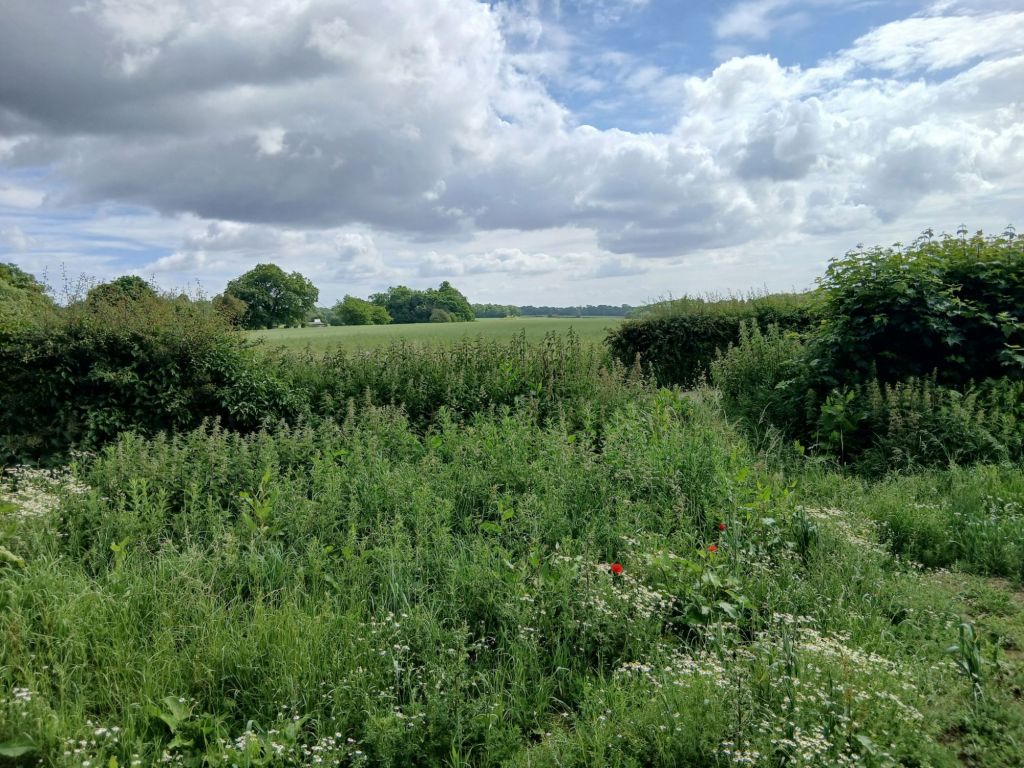
For communities such as Grimethorpe, Cudworth, Brierley and the surrounding villages, the return of open land represents recovery from the industrial past. It provides views, separation between settlements, wildlife habitat, agricultural use and places where residents can walk away from roads, estates and industrial buildings.
After generations were expected to tolerate pits, pollution, spoil heaps and industrial decline, they are now being told to accept fields of glass, security fencing, transformers, substations, CCTV equipment and electrical infrastructure.
Developers describe such schemes as temporary.
But 40 years is not temporary in the life of a resident.
A child growing up beside a solar development could reach middle age before it is removed. Someone retiring today may never see the land restored. Forty years represents an entire working life and a substantial part of a community’s history.
Calling a development temporary does not make its effects insignificant.
Marr and Grimethorpe Are Different — but the Message Is the Same
Marr and Grimethorpe are not identical locations.
Marr is an historic agricultural village whose character continues to be shaped by its farms and open countryside. Doncaster Council describes it as a small agricultural street village, mentioned in the Domesday Book, which developed around the farms serving the settlement.
Grimethorpe is a former mining community whose identity, landscape and economy were fundamentally changed by the coal industry.
But the two decisions share a common principle.
People do not want South Yorkshire’s remaining green spaces progressively enclosed and industrialised to satisfy centrally imposed energy targets.
They do not accept that every field located near a possible grid connection should automatically become an energy development.
They do not believe that planting a hedge around thousands of solar panels preserves the original character of the countryside.
And they do not believe that a community benefit fund gives a developer the right to transform a landscape for four decades.
That is not opposition to all energy development. It is a demand for proportion, proper location and respect for communities that have already made an enormous contribution to Britain’s industrial and energy history.
Put Solar Where the Electricity Is Used
There are millions of roofs across Britain.
Warehouses, factories, supermarkets, distribution centres, schools, hospitals, council buildings, railway stations, car parks and new housing developments all provide opportunities for generating electricity closer to where it is consumed.
Government policy should be concentrating on rooftop solar, covered car parks, industrial estates and genuinely degraded brownfield locations before allowing extensive ground-mounted schemes across farmland, Green Belt and restored countryside.
Energy policy should also recognise that solar power cannot by itself provide the reliable winter electricity Britain requires. Covering more land does not change the fact that solar output is lowest during the cold, dark months when national electricity demand is often at its greatest.
A serious energy strategy would combine rooftop generation with dependable domestic power, grid investment and technologies that reduce land requirements rather than continually increasing them.
South Yorkshire should not be turned into an open-air power station simply because the national government has failed to produce a balanced energy plan.
A Warning to Developers
The rejection of Grimethorpe Solar Farm should be treated as a warning.
So should the unanimous refusal at Marr.
Communities across South Yorkshire are organising, researching planning applications, challenging developers’ claims and demanding that councillors defend the places they represent.
The public is no longer prepared to accept that approval is inevitable simply because a proposal carries the label “renewable”.
Nor should democratically elected councillors be treated as an inconvenience when they reach a different conclusion from planning officers or developers.
Planning committees exist to exercise judgement. They must weigh national policies against local circumstances, landscape harm, agricultural value, community impact and the cumulative consequences of development.
At Marr and Grimethorpe, councillors exercised that responsibility.
They should be congratulated for doing so.
Leave Our Greenery Alone
South Yorkshire powered this country.
Its miners went underground. Its steelworkers entered furnaces and rolling mills. Its communities lived beside the smoke, dust and machinery of industrial Britain.
When those industries disappeared, the region was left to deal with unemployment, dereliction and the long process of rebuilding damaged land and damaged communities.
The green spaces that emerged from that history are not spare capacity.
They are part of the region’s recovery.
They belong to communities that have already endured enough transformation imposed upon them by people who do not live there.
Marr said no.
Grimethorpe has now said no.
Other communities across Barnsley, Doncaster, Rotherham and Sheffield are beginning to say the same.
The message to Enviromena, the solar industry and the government could not be clearer:
South Yorkshire has carried Britain’s industrial burden for generations.
We will not allow our recovered countryside to be sacrificed all over again.
Leave our greenery alone.
Shane Oxer. Campaigner for fairer and affordable energy
 SAY NO TO THE DESTRUCTION OF OUR LAND
Leave a comment