For years, ordinary people questioning Britain’s energy strategy were dismissed as cranks, deniers, or “anti-green”. Anyone raising concerns about grid stability, rising standing charges, overreliance on weather-dependent generation, or the true cost of Net Zero was treated as if they simply “didn’t understand the science.”
Yet here we are in 2026, and the mainstream press is finally reporting exactly what many campaigners, engineers, and independent researchers warned about years ago.
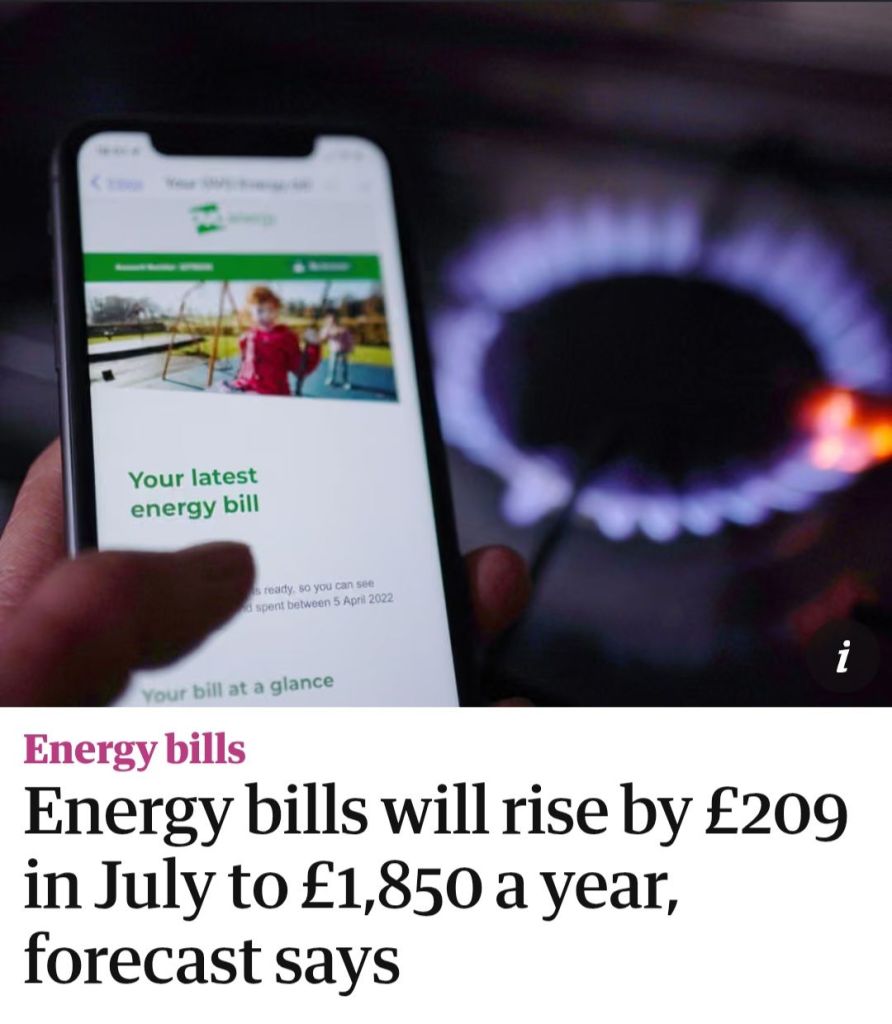
Energy bills are rising again.
Forecasts now suggest the average annual household bill could approach £1,900. Once again, the explanation offered is geopolitical instability and rising gas prices following tensions in the Middle East. While those events clearly matter, they do not explain the deeper problem facing Britain.
The truth is simpler — and more uncomfortable.
Britain built an energy strategy based on ideology instead of engineering reality.
For nearly two decades, governments pursued legally binding carbon targets without first rebuilding the physical infrastructure needed to support such a transformation. Instead of strengthening the grid before forcing rapid electrification, policymakers raced ahead with intermittent generation while assuming the technical problems would somehow solve themselves later.
They did not.
Today the British public are paying for the consequences.
The Promise Versus Reality
The public were repeatedly told that renewable expansion would lower energy bills.
Instead, households have experienced:
soaring standing charges,
increasing network costs,
balancing mechanism payments,
renewable constraint payments,
grid reinforcement charges,
and continued exposure to volatile international gas prices.
This is the contradiction at the heart of Britain’s modern energy policy.
If renewables were genuinely replacing dependency on fossil fuels at the pace claimed, then why do international gas shocks still cause British electricity prices to surge?
Because gas still underpins the entire system.
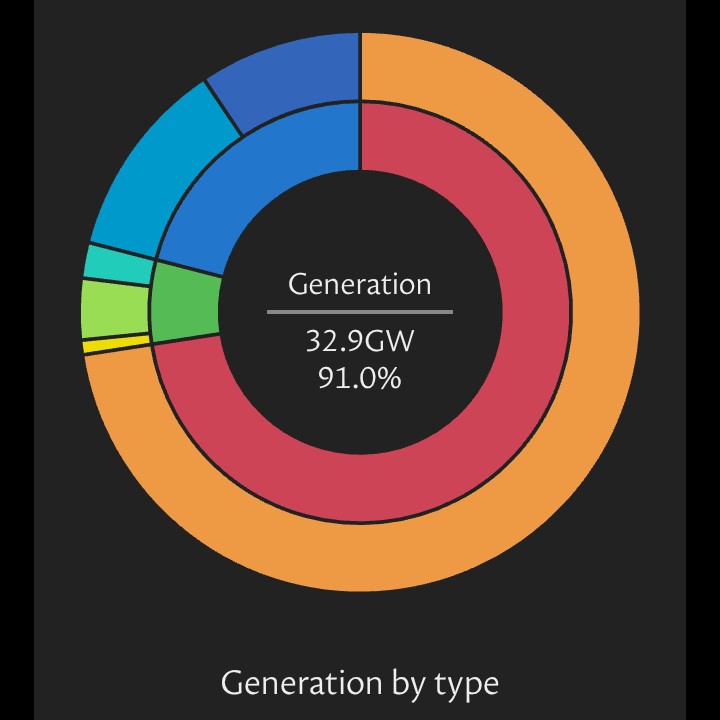
Despite the rapid expansion of wind and solar, Britain still relies heavily on gas-fired generation to stabilise frequency, provide dispatchable power, and maintain reliability when renewable output collapses.
That is not ideology. That is physics.
The Grid Nobody Wanted to Talk About
For years, independent researchers and campaigners warned that the grid itself was becoming the hidden crisis behind Net Zero policy.
Massive renewable expansion requires:
new substations,
super grid transformers,
HVDC infrastructure,
synchronous compensators,
reinforcement corridors,
balancing systems,
and enormous backup capacity.
All of this costs money.
A great deal of money.
Those costs do not disappear simply because politicians avoid discussing them. They are quietly transferred onto household bills through standing charges, network levies, subsidies, and hidden system costs.
Consumers are effectively paying for two systems simultaneously:
the legacy fossil-fuel-backed grid required to maintain stability,
and the enormous parallel infrastructure needed to support intermittent generation.
This is why bills continue rising despite record renewable deployment.
The Seasonal Reality Politicians Avoid
One of the biggest failures in Britain’s energy debate has been the refusal to acknowledge seasonal mismatch.
Solar generation performs best when electricity demand is relatively low — during long summer days.
But Britain’s highest demand occurs during dark, cold winter periods when solar output collapses.
Wind generation can help, but prolonged low-wind events remain a serious risk across northwestern Europe. During these periods, countries simultaneously compete for limited dispatchable supply.
This means Britain still requires:
gas,
nuclear,
interconnectors,
or imported electricity to maintain stability.
Battery storage cannot solve this problem at national scale.
Most battery systems provide only short-duration balancing measured in hours, not weeks. They are useful for grid smoothing but entirely insufficient to sustain a modern industrial economy through prolonged low-renewable conditions.
Again, this is not ideology. It is engineering reality.
The Public Are Beginning to Notice
What has changed recently is not the underlying reality — it is public awareness.
People are beginning to realise:
their bills are not falling,
standing charges continue increasing,
infrastructure projects are multiplying across the countryside,
and Britain remains vulnerable to international energy shocks despite years of climate policy.
That growing frustration explains why media outlets are finally starting to acknowledge issues that independent voices have raised for years.
The debate is slowly shifting from:
“How fast can we deploy renewables?”
to:
“Can the system actually function as designed?”
That is a profoundly important shift.
Britain Needs Energy Realism
This country urgently needs an energy strategy based on practicality, resilience, affordability, and engineering realism.
That means:
rebuilding reliable domestic generation,
prioritising grid stability before ideology,
investing in dispatchable power,
modernising infrastructure rationally,
and protecting consumers from endless system costs.
It also means being honest with the public.
There is no such thing as “free” energy infrastructure. There is no magical transition without trade-offs. And there is no stable modern economy without reliable baseload power.
The public were told to trust the experts.
Now the bills are telling a different story.
Britain does not need more slogans. It needs honesty, realism, and a government willing to listen to evidence instead of ideology.
Shane Oxer. Campaigner for fairer and affordable energy
 SAY NO TO THE DESTRUCTION OF OUR LAND
Leave a comment