For more than fifteen years, the British public has been told that extraordinary measures were necessary to “save the planet.” Governments spoke of climate emergencies, “code red for humanity,” and rapidly closing windows for action. The message was simple: accept radical transformation now, or face catastrophe later.
What followed was one of the largest political, economic, and infrastructural shifts in modern British history.
The result is a country with some of the highest industrial electricity prices in the developed world, a strained and unstable grid, growing dependence on imports, mounting infrastructure costs, and a widening divide between political ambition and engineering reality.
The uncomfortable truth is that many of the policies driving this transformation were not built around balanced risk assessment or realistic energy planning. They were accelerated by extreme climate projections, politically amplified fear, and an ideological belief that rapid decarbonisation justified almost any economic cost.
This is not an argument against climate science itself. The greenhouse effect is real. The climate changes. Human activity contributes to warming. But there is an enormous difference between acknowledging climate risk and constructing an entire national economic model around worst-case scenarios treated as inevitabilities.
That distinction matters because Britain’s Net Zero strategy was built not merely on science, but on the politics of urgency.
The Rise of Catastrophic Framing
Modern climate politics increasingly relied on high-end projections presented to the public as likely futures rather than outer-bound possibilities.
One of the most influential examples was the widespread use of the RCP8.5 emissions scenario. Originally designed as an extreme stress-test pathway, RCP8.5 assumed extraordinarily high coal consumption, rapid population growth, and limited technological advancement. Over time, however, it became widely portrayed in media reporting, government summaries, financial risk assessments, and activist campaigns as a “business as usual” future.
This distinction was critical.
When the public repeatedly hears that catastrophic warming is the likely outcome unless radical action is taken immediately, political resistance weakens. Emergency framing bypasses normal scrutiny. Costs become secondary. Speed becomes the priority.
The same dynamic appeared in the UK’s climate modelling and policy structures.
The 2018 UK Climate Projections (UKCP18), heavily publicised by the Met Office and government agencies, included severe warming pathways showing dramatic future heat increases under high-emissions assumptions. These projections fed directly into adaptation plans, infrastructure assessments, carbon budgets, and political messaging surrounding the UK’s legally binding Net Zero target.
By 2019, Parliament had committed Britain to Net Zero by 2050 with remarkably limited public debate about long-term cost, industrial consequences, grid feasibility, or Britain’s relatively small share of global emissions.
The atmosphere of urgency made opposition politically dangerous.
Questioning policy details increasingly became conflated with denying climate science itself.
From Scientific Caution to Political Instrument
Science is supposed to assess probabilities, uncertainties, and trade-offs. Politics often prefers certainty and moral clarity.
That tension became increasingly visible as climate communication evolved from cautious modelling into emotionally charged narratives of impending collapse.
Films like An Inconvenient Truth helped popularise climate awareness, but they also normalised apocalyptic framing. Activist campaigns increasingly portrayed climate change not as a complex long-term risk management challenge, but as an imminent existential emergency requiring sweeping intervention.
The language changed:
“Climate emergency”
“Last chance”
“Tipping points”
“Irreversible collapse”
These phrases became political tools as much as scientific descriptors.
Once governments formally declared emergencies, extraordinary policy measures became easier to justify:
Massive renewable subsidies
Accelerated coal closures
Internal combustion engine bans
Boiler phase-out targets
Expensive transmission expansion
Large-scale solar industrialisation of farmland
Battery storage megaprojects
Electrification mandates without matching infrastructure readiness
The problem was not merely ambition.
The problem was that urgency displaced proportionality.
Britain’s Energy Transformation Without Engineering Reality
The UK pursued decarbonisation at extraordinary speed while simultaneously dismantling large portions of its reliable baseload generation.
Coal was rapidly phased out.
Gas investment became politically toxic.
Nuclear expansion stalled for decades.
Yet intermittent renewables were scaled aggressively despite known limitations around storage, inertia, seasonal mismatch, and transmission bottlenecks.
This produced a deeply contradictory system:
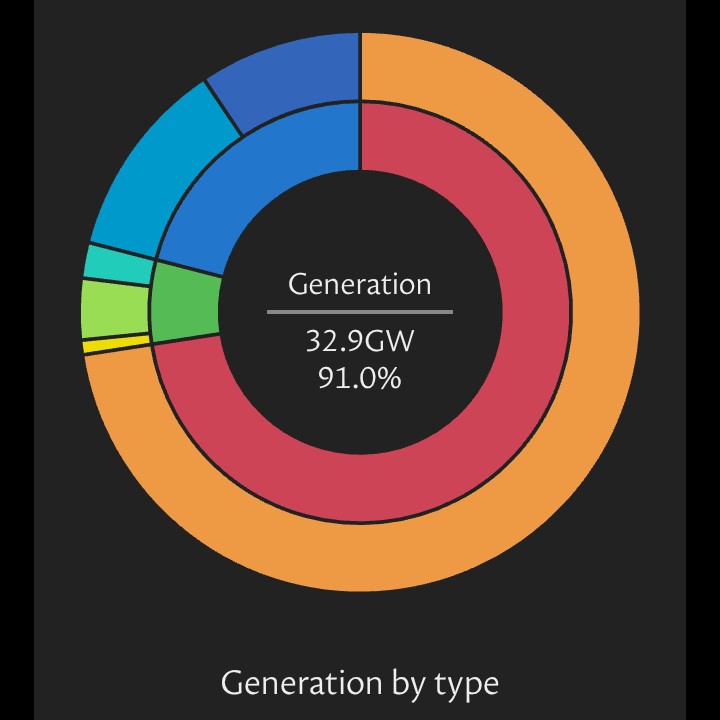
Britain now generates substantial renewable electricity during favourable weather conditions, yet still relies heavily on gas backup, imported electricity, interconnectors, and expensive balancing mechanisms when wind or solar output collapses.
The public was repeatedly told renewable energy would dramatically reduce bills.
Instead, households experienced soaring energy costs, increasing standing charges, and mounting hidden infrastructure expenses.
The deeper issue is that the full system costs were rarely honestly presented.
Politicians highlighted falling turbine and panel prices while downplaying:
Grid reinforcement costs
Curtailment payments
Backup generation requirements
Constraint payments
Substation expansion
Storage limitations
System balancing services
Synchronous compensation infrastructure
Transmission corridor expansion
Land acquisition costs
Deindustrialisation impacts
The result was a distorted public understanding of affordability.
Cheap generation does not automatically produce a cheap energy system.
The Grid Nobody Voted For
One of the least discussed consequences of Net Zero policy is the scale of physical infrastructure now required to support it.
Britain’s historic grid was designed around concentrated AC generation from coal, gas, and nuclear plants located near industrial demand centres.
The new system increasingly depends on diffuse, weather-dependent generation located far from demand.
That means enormous new transmission corridors, substations, converters, pylons, transformers, and balancing infrastructure.
Across the country, communities are now facing industrialisation of countryside landscapes in the name of decarbonisation.
In regions like Yorkshire, Lincolnshire, Norfolk, and the Midlands, farmland is increasingly targeted for solar developments, battery storage systems, substations, and transmission infrastructure.
Many local residents were never asked whether they wanted this transformation.
The political mandate for Net Zero was broad and abstract.
The actual physical consequences were largely hidden from public view until projects arrived at local planning stages.
This is where ideology collides with democracy.
The Economic Contradiction
Britain currently contributes roughly 1% of global emissions.
Meanwhile, China continues building coal generation capacity at enormous scale. India prioritises energy access and industrial expansion. Much of the developing world understandably views cheap, reliable energy as essential for lifting populations from poverty.
Yet Britain adopted some of the world’s most aggressive decarbonisation targets while possessing comparatively limited industrial resilience.
The consequences are becoming increasingly visible:
High industrial energy costs
Manufacturing decline
Investment leakage
Increased import dependency
Reduced energy sovereignty
Greater exposure to volatile international markets
Heavy industry cannot survive indefinitely under structurally elevated electricity costs.
Steel, chemicals, ceramics, fertiliser, and advanced manufacturing sectors all depend on affordable and reliable power.
An economy built around intermittent supply and escalating infrastructure overheads risks hollowing out its productive base while importing emissions-intensive goods from abroad.
This is not climate leadership.
It is often emissions outsourcing.
The RCP8.5 Reckoning
Even within climate science itself, criticism of exaggerated scenario usage has grown.
Researchers such as Roger Pielke Jr. and others have argued that RCP8.5 was repeatedly misrepresented as a likely baseline rather than an extreme stress scenario.
Over time, many institutions quietly shifted toward more moderate pathways as technological trends, demographics, and energy realities evolved.
But the political architecture built during the period of maximum alarm remains firmly embedded:
Net Zero legislation
Carbon budgets
Planning frameworks
Investment mandates
Financial disclosure rules
ESG frameworks
Regulatory assumptions
In other words, even as some scientific assumptions became less extreme, the policy momentum continued.
The machinery of decarbonisation had already been constructed.
The Democratic Problem
Perhaps the greatest issue is not climate science itself, but democratic accountability.
Many of the most consequential energy decisions in modern Britain are now shaped by:
Quangos
Advisory committees
Regulatory bodies
International agreements
Judicial obligations
Carbon accounting frameworks
The average voter has little influence over these systems.
Yet they directly affect:
Energy prices
Housing costs
Transport rules
Industrial policy
Farming
Infrastructure planning
Consumer choices
This creates growing political tension.
When populations feel major economic sacrifices are imposed without meaningful consent or realistic debate, backlash becomes inevitable.
That backlash is already emerging across Europe and beyond.
A More Rational Energy Future
The alternative is not climate denial.
It is realism.
A serious energy strategy would prioritise:
Reliable baseload generation
Modern nuclear expansion
Domestic gas resilience
Genuine grid modernisation
Research and innovation
Industrial competitiveness
Strategic adaptation
Energy sovereignty
Cost-effectiveness per tonne reduced
It would also distinguish clearly between:
plausible risks,
worst-case stress tests,
and political narratives designed to manufacture urgency.
Climate risk deserves serious attention.
But policy built primarily around fear eventually loses public trust.
Britain needs an energy policy grounded not in ideological symbolism, but in engineering, economics, and democratic consent.
Because when ideology overrides realism, the public eventually pays the price.
And Britain already is.
Shane Oxer. Campaigner for fairer and affordable energy
 SAY NO TO THE DESTRUCTION OF OUR LAND
Leave a comment