Britain cannot claim to be protecting nature while sacrificing peatlands, farmland, wildlife habitats and historic landscapes to an increasingly aggressive programme of industrial energy development.
There is an important distinction to make at the outset.
The Nature’s Rights Bill is not yet an Act of Parliament. It is still a Private Member’s Bill, introduced in the House of Lords by Baroness Bennett of Manor Castle.
It received its Second Reading on 3 July 2026 and was committed to a Committee of the Whole House. Its Committee Stage has yet to be scheduled. It must still survive detailed scrutiny, complete its remaining stages in the Lords, pass through the House of Commons and receive Royal Assent before it becomes law.
That process must now be accelerated.
Not because every clause is necessarily perfect. Not because nature should prevent all development. And certainly not because Britain does not need reliable and affordable energy.
It must be accelerated because the present planning system is allowing government policy to place enormous weight on renewable-energy targets while treating the natural environment as something that can be surveyed, priced, “mitigated” and ultimately sacrificed.
The central principle of this Bill is simple:
«Nature should not merely be something about which ministers are required to complete paperwork. Nature should possess rights that government, developers and public bodies are legally required to respect.»
That principle could not be more urgent.
The great contradiction at the heart of government policy
Ed Miliband remains Secretary of State for Energy Security and Net Zero, with overall responsibility for the department driving the Government’s rapid expansion of renewable-energy infrastructure.
The Government has committed itself to doubling onshore wind capacity by 2030. One of its first planning actions after taking office was to remove the special planning tests that previously required onshore wind schemes to demonstrate that local impacts had been addressed and community support secured.
Ministers describe this as the removal of barriers to clean energy.
Communities increasingly experience it as the removal of their protection.
Across Britain, vast solar developments, battery compounds, substations, transmission corridors, pylons and increasingly tall wind turbines are being proposed across farmland, peatland, moorland and open countryside.
The argument used to justify them is nearly always the same: the scheme contributes to national Net Zero objectives, and therefore its benefits must be given substantial weight.
Nature is then divided into separate chapters of an Environmental Statement:
– ecology;
– ornithology;
– hydrology;
– peat;
– soils;
– landscape;
– carbon;
– flood risk.
Each impact is assessed separately. Each loss is described as manageable. Each disturbance is promised to be mitigated. Each habitat is reduced to a score, a calculation or a compensation proposal.
But nature does not exist in separate planning chapters.
A peatland is simultaneously a carbon store, a water-regulation system, a wildlife habitat, a landscape, a living soil system and part of a wider catchment.
Destroying one part can damage the functioning of the whole.
That is the fundamental truth the Nature’s Rights Bill attempts to place at the centre of law.
Hope Moor shows why existing protection is not enough
Hope Moor Wind Farm provides an immediate example.
In August 2025, the Department for Energy Security and Net Zero issued a direction allowing the proposed Hope Moor Wind Farm to be treated as nationally significant infrastructure under the Planning Act 2008. The direction records that the development would have a capacity greater than 100MW and says that its scale and contribution to government energy objectives make it nationally significant.
The present scoping design refers to a proposed 23-turbine development, with turbines potentially reaching 200 metres to blade tip.
The project has not yet received development consent. Moving it into the national consenting system is not the same as approving it.
But it places the eventual decision in a system where national energy policy, ministerial targets and the claimed need for renewable generation will carry considerable weight.
The developer’s own Environmental Impact Assessment Scoping Report reveals why this matters.
Natural England’s peat mapping indicates extensive areas of deep peaty soil exceeding two metres across the western and central parts of the wind-farm area. Preliminary probing recorded localised deep peat reaching a maximum depth of 4.91 metres.
The report identifies habitats including blanket bog, degraded blanket bog, upland flushes, fens, swamps, heathland and watercourses. Significantly, it acknowledges that these habitats exist in a close mixture or mosaic, are functionally linked and should be considered as a single important ecological feature. It also recognises blanket bog as an irreplaceable habitat.
The study area lies within interconnected catchments and contains several assessed river water bodies. The published baseline records poor or moderate ecological status and failed chemical status for the water bodies listed in the report.
This is not an empty industrial site.
It is not a disused power-station complex.
It is not a warehouse roof.
It is a living upland environment containing deep peat, hydrological connections, wildlife habitats, watercourses and landscape features that cannot simply be recreated somewhere else.
Yet the project is being advanced precisely because the Government has decided that large-scale onshore wind should be accelerated.
That is why the Nature’s Rights Bill is needed.
Existing policy sounds strong—but still leaves nature dependent upon ministerial discretion
The Government will argue that existing environmental protections are sufficient.
Indeed, the current National Policy Statement EN-1 classifies blanket bog as an irreplaceable habitat. It states that development consent should not be granted where a project would cause the loss or deterioration of irreplaceable habitat unless there are wholly exceptional reasons and a suitable compensation strategy.
The current renewable-energy policy statement, EN-3, also recognises that peatland can extend several metres in depth, that disturbance can alter local hydrology and that soil disturbance can release carbon dioxide.
It says developers should rule out other locations before choosing peatland, avoid deep peat and justify why infrastructure needs to be placed there. It also says the Secretary of State should be satisfied that deep peat has been avoided and alternative locations ruled out.
These policies must be used forcefully against environmentally destructive schemes.
But they still leave the ultimate balance with the same political system that is pursuing accelerated deployment.
The language repeatedly returns to what the Secretary of State considers justified, acceptable, mitigated or outweighed by national need.
The protection of nature therefore remains vulnerable to political priorities.
A minister can acknowledge that peatland is important and still conclude that a wind farm is more important.
A decision-maker can recognise landscape damage and still describe it as an acceptable consequence of national energy policy.
A developer can acknowledge habitat disturbance and still propose off-site compensation.
The Nature’s Rights Bill would begin to change that relationship.
What the Bill would actually do
It would recognise nature as a legal subject
Clause 2 would recognise nature as a legal subject and rights-bearing entity.
That does not mean that a mountain becomes a human being or that a river receives a passport.
It means that ecosystems, habitats and natural systems would have interests that could be recognised and defended in law.
The Bill expressly states that this would not transfer land ownership, create an automatic right of public access or prevent compatible lawful use of property.
This is important because opponents will inevitably suggest that recognising nature’s rights means abolishing farming, construction or private ownership.
It does not.
It means that ownership would no longer carry an unrestricted moral licence to destroy the ecological system on which everyone else depends.
It would give nature substantive rights
Clause 3 proposes rights for nature to:
– exist, persist and evolve;
– maintain and regenerate ecological integrity;
– be restored where damage occurs;
– remain free from serious pollution and degradation;
– maintain natural hydrological, climatic, geological, soil and ecological processes;
– preserve connectivity, diversity, abundance and resilience.
These rights could be applied to particular habitats, ecosystems, species communities and natural systems.
For Hope Moor, that could mean considering the moor as an interconnected peatland, catchment and habitat system—not merely as a series of potential turbine positions.
The legal question would no longer be confined to whether individual engineering impacts had been calculated.
It would include whether the project interfered with the moor’s ability to continue functioning as a living ecological system.
It would create a legal duty of care
Clause 5 would require public authorities, businesses and other relevant persons to take reasonable and proportionate steps to protect, preserve and restore nature, prevent harm, remedy ecological damage and support regeneration.
Crucially, the duty would include consideration of less harmful alternatives. Compliance could require a damaging activity to be prevented, modified or ceased.
This would change the planning question from:
«How can we mitigate the damage caused by building here?»
to:
«Why are we building here when a less harmful alternative may exist?»
That distinction is fundamental.
The mitigation-first culture has allowed developers to select environmentally sensitive land and then design elaborate management plans around the damage.
A rights-based system would strengthen the requirement to avoid the damage in the first place.
It would require proper Rights Impact Assessments
Clause 9 would require a Rights Impact Assessment where a project, policy, financial decision or activity might materially affect nature.
That assessment would have to consider:
– direct effects;
– indirect effects;
– cumulative effects;
– cross-boundary effects;
– systemic consequences;
– ecological costs;
– less harmful alternatives;
– restoration and regeneration.
It could be incorporated into an existing Environmental Impact Assessment, but the relevant questions would have to be addressed expressly.
This could be transformative for major energy projects.
Developers would have to examine not only the turbine foundation or solar-panel field, but also the access roads, drainage, cabling, substations, borrow pits, construction compounds, grid connections and cumulative effects of other developments.
The practice of dividing one ecological system into separate technical assessments would become much harder to defend.
Planning consent would not become a licence to cause serious damage
Under Clause 8, possessing a permit, licence or development consent would not automatically prove compliance with nature’s rights.
Authorities would have to consider whether permits and consents were compatible with ecological integrity and the new duty of care. Existing permissions could potentially be reviewed, varied, suspended or revoked where the necessary legal powers existed.
This is one of the reasons developers and government departments may fear the Bill.
At present, once consent has been secured, environmental damage can become treated as an authorised consequence of development.
Under the Bill, the existence of consent would not necessarily close the door where serious, irreversible or systemic harm was occurring.
It would apply the precautionary principle properly
Clause 34 states that where serious, irreversible, cumulative or systemic harm is possible, scientific uncertainty must not be used as an excuse to postpone reasonable protective action.
The body supporting or authorising the activity would have to show that the risk had been assessed, less harmful alternatives considered and adequate prevention and restoration measures secured.
This is especially important for peat.
Developers may promise that excavated peat will be restored, drains managed and habitats improved.
But once a complex peatland hydrological system has been cut by tracks, trenches, foundations and construction drainage, complete restoration may be uncertain or impossible.
The burden should not fall upon residents to prove beyond doubt that irreversible damage will happen.
The burden should fall upon the developer to demonstrate that it will not.
Communities could bring proceedings in the name of nature
Clause 30 would allow proceedings to be brought in the name of nature by bodies including affected communities, charities, community organisations and public-interest organisations.
The proposed Nature’s Rights Tribunal could grant injunctions, restoration orders, monitoring requirements and orders suspending or modifying harmful activities.
For communities confronting multinational developers and government departments, this could rebalance access to environmental justice.
At present, residents are frequently required to raise money, understand complex planning law and establish their own legal standing while developers possess teams of consultants and lawyers.
The Bill would recognise that communities can act not only for themselves, but as guardians of the ecosystem threatened by a proposal.
Why the Government’s opposition is revealing
During the Second Reading debate, the Government acknowledged the seriousness of environmental decline but rejected the central mechanism of the Bill.
Its position was that recognising nature as a legal subject was not the correct approach. Ministers argued that the Environment Act 2021 and Environmental Improvement Plan already provide a comprehensive framework and warned that the Bill could generate uncertainty, procedural complexity and litigation.
The minister concluded that the Government could not support it.
That response should concern anyone fighting to protect the countryside.
The Government’s objection is not that the natural environment is already flourishing.
It is not that biodiversity loss has ended.
It is not that rivers are clean, peatlands secure or wildlife recovering everywhere.
Its objection is that enforceable rights for nature could complicate development and allow more legal challenges.
But that is precisely the point.
Environmental protection that can never delay, alter or stop a damaging development is not meaningful protection.
A law that merely records the destruction is not enough.
A biodiversity calculation completed after the site has been selected is not enough.
A promise of compensation elsewhere is not enough.
Nature needs a legal voice capable of saying no.
The Bill should be improved—but not buried
There are legitimate questions that Parliament must examine.
Definitions must be clear.
The relationship between the proposed tribunal, existing courts and environmental regulators must be workable.
Penalties must be proportionate.
Farmers, land managers and householders must not face unreasonable uncertainty for ordinary and responsible activities.
The system must not create an expensive new bureaucracy that absorbs money while doing little practical work.
But these are arguments for careful amendment at Committee Stage—not excuses to kill the Bill.
Parliament routinely refines complex legislation.
The central principles should remain:
– nature has an intrinsic right to exist and regenerate;
– serious and irreversible harm must be avoided;
– less damaging alternatives must be considered;
– communities must be able to defend ecological systems;
– consent must not become a shield for destruction;
– restoration must take priority over financial compensation.
Why it must become law quickly
Time matters because energy projects already in the planning system are progressing.
Hope Moor is only one example.
Across the country, communities face proposals that could change landscapes for generations. Once peat has been excavated, ancient soil disturbed, wildlife displaced, farmland covered or a landscape industrialised, a later change in the law may come too late.
The Bill must therefore contain meaningful transitional provisions.
If enacted, its core duties should apply to major projects that have not received a final decision, including projects already in the Development Consent Order pipeline.
Otherwise, developers could rush applications forward before the new protections take effect.
The Government should also consider an immediate presumption against consenting major energy infrastructure on deep peat or irreplaceable habitat while the legislation is progressing.
That would not stop renewable energy.
It would require renewable energy to be placed where it causes the least ecological harm.
There are alternatives:
– industrial and brownfield land;
– commercial roofs;
– car parks;
– warehouses;
– previously developed sites;
– smaller-scale distributed generation;
– repowering appropriate existing sites;
– nuclear power;
– domestic gas for system security;
– emerging lightweight rooftop solar technologies.
The choice is not between industrialising Hope Moor and abandoning energy security.
The real choice is between intelligent energy planning and ideological haste.
A direct challenge to Ed Miliband
Ed Miliband cannot present himself as the guardian of the climate while allowing carbon-rich peatlands, countryside and wildlife habitats to become collateral damage in the pursuit of renewable-capacity targets.
A policy is not environmentally responsible merely because the infrastructure carries a green label.
A wind turbine constructed on damaged peat is not impact-free.
A solar farm covering productive countryside does not become harmless because its output is renewable.
A battery compound does not cease to have landscape, safety and ecological consequences because it supports Net Zero.
True environmentalism requires government to protect the whole natural system—not select one carbon target and sacrifice everything else to it.
The Nature’s Rights Bill would force ministers to confront that contradiction.
That is why the Government appears unwilling to support it.
And that is why the public should demand that it does.
Parliament must act
Members of the House of Lords should move the Bill rapidly into Committee and strengthen its practical provisions.
MPs should demand parliamentary time when it reaches the Commons.
The Government should reverse its opposition and permit a free and serious debate.
Most importantly, the Bill must be amended to ensure that its protections apply to major projects still awaiting final determination.
Hope Moor should become a national case study demonstrating why the law must change.
This is about more than one wind farm.
It is about whether the countryside exists only until a developer finds a profitable use for it.
It is about whether peatlands, rivers, habitats and landscapes possess any protection that cannot be overridden by ministerial policy.
It is about whether future generations inherit functioning ecosystems—or photographs of what once existed.
Nature cannot speak in a planning examination.
Peatland cannot instruct a solicitor.
A river cannot lodge a legal objection.
Wildlife cannot vote.
That is why the law must give nature a voice.
And it must do so before Ed Miliband’s energy rush destroys more of the countryside it claims to be saving.
Shane Oxer. Campaigner for fairer and affordable energy
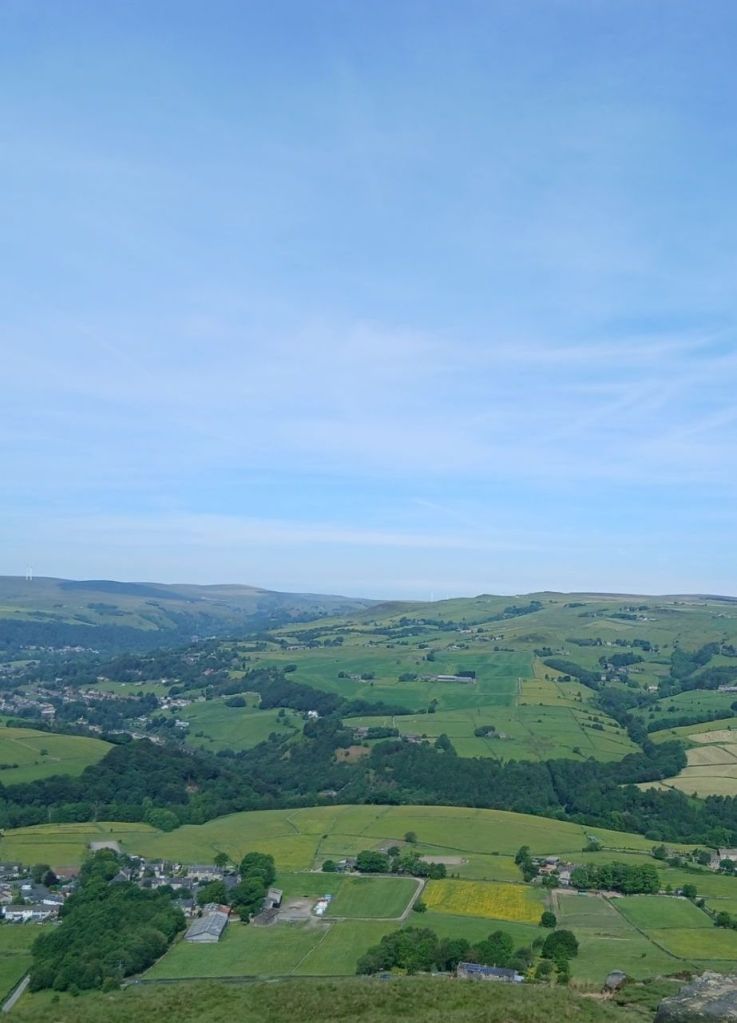

 SAY NO TO THE DESTRUCTION OF OUR LAND
Leave a comment